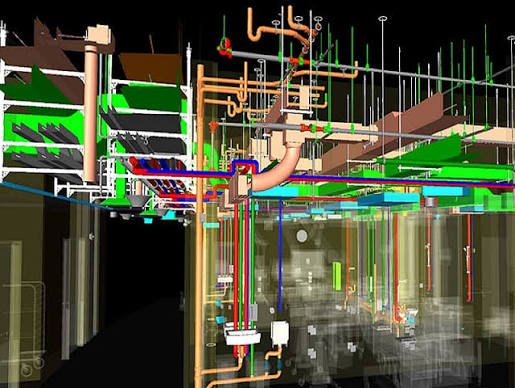
BIM Coordination: Improving Construction Accuracy and Project Control
Meta Title: bim coordination for Better Construction Project Control
Meta Description: Learn how bim coordination improves construction accuracy, reduces project conflicts, supports teamwork, and helps teams manage complex building systems.
Construction projects involve many disciplines working within the same physical space. Architects, engineers, contractors, and subcontractors must coordinate their work carefully.
However, even minor design conflicts can create significant problems during construction. A misplaced duct, structural beam, or pipe can affect several other systems.
Therefore, project teams need reliable methods for identifying conflicts before they reach the construction site. Bim coordination provides a structured way to review building systems within a shared digital environment.
It allows teams to compare different models and identify potential conflicts before installation begins. Additionally, clash detection services can help teams identify geometric conflicts across architectural, structural, and MEP systems.
The process also improves communication because project participants can review the same digital information. As a result, teams can make decisions earlier and reduce unnecessary changes during construction.
What Is BIM Coordination?
BIM coordination is the process of combining and reviewing digital building models from multiple disciplines.
Each discipline usually develops its own model. Architectural teams focus on spaces and finishes. Structural teams develop framing and structural elements. MEP teams coordinate mechanical, electrical, and plumbing systems.
These models must work together within the same building environment. Otherwise, conflicts can appear during construction.
Coordination teams bring these models together and review their relationships. They examine spaces, elevations, clearances, connections, and installation requirements.
The goal is not simply to create a detailed model. Instead, the goal is to make project information more coordinated and useful.
This process can happen at different project stages. Early coordination can address major design issues. Later reviews can focus on detailed installation conditions.
Consequently, regular coordination can provide better control throughout the project lifecycle.
Why BIM Coordination Matters in Construction
Construction errors often become expensive after materials arrive at the site. Fixing a problem during installation can require additional labor, materials, equipment, and time.
Digital coordination provides an opportunity to identify many issues earlier. Teams can review potential problems while changes remain easier to manage.
For example, an HVAC duct may pass through a structural beam. The conflict might appear obvious during installation, but correcting it on-site can delay several trades.
A coordinated model can identify the problem before installation. The responsible teams can then review alternative routes and agree on a practical solution.
This approach improves project predictability. Furthermore, it gives contractors better information before field activities begin.
Major Benefits of BIM Coordination
Reducing Construction Conflicts
The most obvious benefit involves identifying conflicts between building systems.
A coordinated model can reveal intersections between pipes, ducts, cable trays, beams, walls, ceilings, and other elements.
Teams can then classify conflicts according to their severity. Major structural or access issues may require immediate attention. Minor conflicts may receive different treatment.
This prioritization helps teams focus their time on issues that could create significant project impacts.
Improving Communication
Large construction projects involve many stakeholders. Each stakeholder may interpret drawings and technical information differently.
A shared model provides a common visual reference. Teams can review specific locations instead of relying only on written descriptions.
Therefore, coordination meetings can become more focused and productive.
Participants can discuss an issue, review its location, and determine the required action. This process can also reduce misunderstandings between design and construction teams.
Supporting Better Planning
Coordination also supports construction planning. Teams can review access requirements, equipment locations, service routes, and installation sequences.
For example, a large mechanical component may require a specific access route. If another system blocks that route, the issue can be addressed before delivery.
This type of review helps contractors consider practical construction conditions earlier.
Reducing Rework
Rework can consume significant project resources. It can also disrupt schedules and affect other trades.
Digital coordination does not eliminate every construction error. However, it can reduce avoidable problems caused by conflicting design information.
When teams resolve conflicts before construction, field crews can work with clearer information.
As a result, coordination can contribute to more efficient installation and fewer unexpected changes.
How Clash Detection Works
Clash detection forms an important part of the coordination process.
The process begins with collecting models from relevant disciplines. These models are then combined within a coordination environment.
Software checks relationships between model elements. Depending on project requirements, teams can identify hard clashes, clearance issues, and workflow-related conflicts.
A hard clash occurs when two physical elements occupy the same space. For instance, a pipe may pass directly through a beam.
A clearance clash occurs when components have insufficient space for installation, maintenance, or operation.
Soft coordination issues can involve access zones, maintenance requirements, or required working spaces.
After identifying conflicts, coordination teams review and classify them. They then assign issues to the appropriate disciplines for resolution.
This process creates a clear record of coordination decisions. Therefore, teams can track issues instead of relying on informal conversations.
The Role of BIM Coordination Services
Professional bim coordination services can support projects that require specialized coordination resources.
External teams can review models, manage coordination workflows, and help organize conflict-resolution processes.
This support can be particularly useful for contractors handling multiple projects simultaneously. It can also help organizations that have limited internal BIM resources.
However, successful coordination requires clear project requirements.
Teams should define modeling standards, file formats, naming conventions, coordination zones, and issue-management procedures.
They should also establish responsibilities for reviewing and resolving conflicts.
Without these standards, coordination can become inconsistent. Therefore, process management remains as important as technical software skills.
BIM Coordination Across Different Project Stages
Coordination requirements change as a project develops.
Design Stage
During design development, coordination focuses on major spatial and system relationships.
Teams can identify issues involving structural layouts, equipment locations, shafts, ceiling spaces, and major service routes.
Early reviews can prevent design decisions from creating difficult construction conditions.
Preconstruction Stage
During preconstruction, coordination becomes more detailed.
Contractors may review trade models, equipment requirements, access conditions, and installation sequences.
At this stage, teams can also coordinate subcontractor information with the broader project model.
Construction Stage
During construction, coordination focuses on field conditions and installation requirements.
Teams may compare updated models against actual site information. Changes can then be documented and communicated to relevant stakeholders.
Regular coordination remains valuable because construction conditions can change after the initial design.
Improving Coordination With Reality Capture
Existing buildings often contain conditions that differ from available drawings.
Reality capture can help teams document these conditions more accurately. Laser scanning and related technologies can create detailed digital representations of existing spaces.
These representations can support model development and coordination activities.
For projects involving existing structures, Reality Capture can provide useful information before teams begin detailed coordination.
For example, a renovation project may involve irregular structural elements or undocumented services. Capturing existing conditions can provide better information for model development.
This approach can reduce assumptions and improve coordination accuracy.
Common BIM Coordination Challenges
Although coordination provides many advantages, several challenges can affect results.
Inaccurate Models
Coordination depends on the quality of source models. Incorrect dimensions, missing components, or outdated information can produce misleading results.
Therefore, teams should review model quality before beginning detailed coordination.
Frequent Design Changes
Design changes can make coordinated information outdated. A model that was accurate last week may require another review after significant revisions.
Regular model updates can help maintain coordination accuracy.
Poor Issue Management
Finding conflicts is only part of the process. Teams must also assign, track, resolve, and verify those issues.
Without proper issue management, the same conflict may appear repeatedly.
Lack of Clear Responsibilities
Projects can experience delays when teams do not know who should resolve a specific issue.
Clear responsibility matrices can help prevent this problem. Each discipline should understand its role in reviewing and closing coordination issues.
Best Practices for Effective BIM Coordination
Effective coordination starts with clear project requirements.
First, establish coordination goals before model reviews begin. Different projects may prioritize different outcomes.
Next, define coordination zones and review priorities. High-risk areas should receive appropriate attention.
Teams should also establish regular coordination meetings. These meetings should focus on unresolved issues and decisions rather than simply reviewing model progress.
Another useful practice involves maintaining consistent model versions. Everyone should understand which files represent the current project information.
Issue tracking should also remain organized. Each conflict should have an identifiable location, responsible party, status, and resolution.
Finally, teams should perform verification after conflicts are resolved. Closing an issue without checking the updated model can create new problems.
These practices help make coordination a continuous project process rather than a one-time review.
BIM Coordination and Facilities Management
Coordination can also create value beyond construction.
A well-developed model may contain information that supports facility operations after project completion.
Owners can use coordinated digital information to understand building systems, equipment locations, and spatial relationships.
This information can support maintenance planning and future renovation work.
For projects with detailed handover requirements, FM Deliverables can help organize useful facility information for downstream operations.
However, teams should define handover requirements early. Waiting until project completion can make information collection more difficult.
Choosing the Right Coordination Approach
Every construction project has different coordination requirements.
Project size, building complexity, delivery method, and stakeholder structure can all affect the appropriate approach.
A small commercial project may require limited coordination. In contrast, hospitals, laboratories, data centers, and high-rise buildings often contain highly interconnected systems.
Therefore, coordination processes should reflect project complexity.
Teams should consider the number of disciplines involved, required model detail, project schedule, and expected deliverables.
They should also consider how coordination information will support field teams.
The most useful coordination process connects digital reviews with practical construction decisions.
Conclusion
Modern construction projects require strong coordination between multiple disciplines and project stakeholders.
Bim coordination helps teams identify conflicts, improve communication, support planning, and reduce avoidable rework before problems reach the field.
When supported by effective bim coordination services, project teams can manage complex models and coordination issues more systematically.
The approach also works alongside related technologies such as reality capture and structured digital handover.
As construction projects become more complex, accurate digital coordination can provide greater visibility before physical work progresses.
For organizations such as Modulus Consulting, coordination forms an important part of connecting digital project information with practical construction requirements.
Ultimately, successful coordination depends on accurate models, clear responsibilities, consistent reviews, and disciplined issue management. These fundamentals help project teams make better decisions throughout design and construction.