Every event organiser, whether running a small community fair or a large-scale festival, takes on a responsibility that extends far beyond ticket sales, logistics, and entertainment. The moment attendees walk through the gates, organisers assume what’s known as a duty of care, a legal and moral obligation to take reasonable steps to protect the people in their charge. Nowhere is this duty more clearly tested than in the provision of event medical services, an area that directly determines how well an organiser is prepared to protect lives when something goes wrong.
What Duty of Care Looks Like in Practice
Duty of care isn’t an abstract concept confined to legal textbooks. It plays out in very practical terms at every event, from a food festival in Ealing to a large outdoor concert in Enfield. It means anticipating what could go wrong, not just hoping it won’t. Someone could collapse from heat exhaustion, suffer an allergic reaction to food, or sustain an injury in a crowd, and when that happens, the organiser is the one who bears responsibility for having adequate provisions in place to respond. Event medical services exist precisely to fulfil that responsibility in a way that ad-hoc first aid boxes simply cannot.
Matching Medical Provision to Event Scale
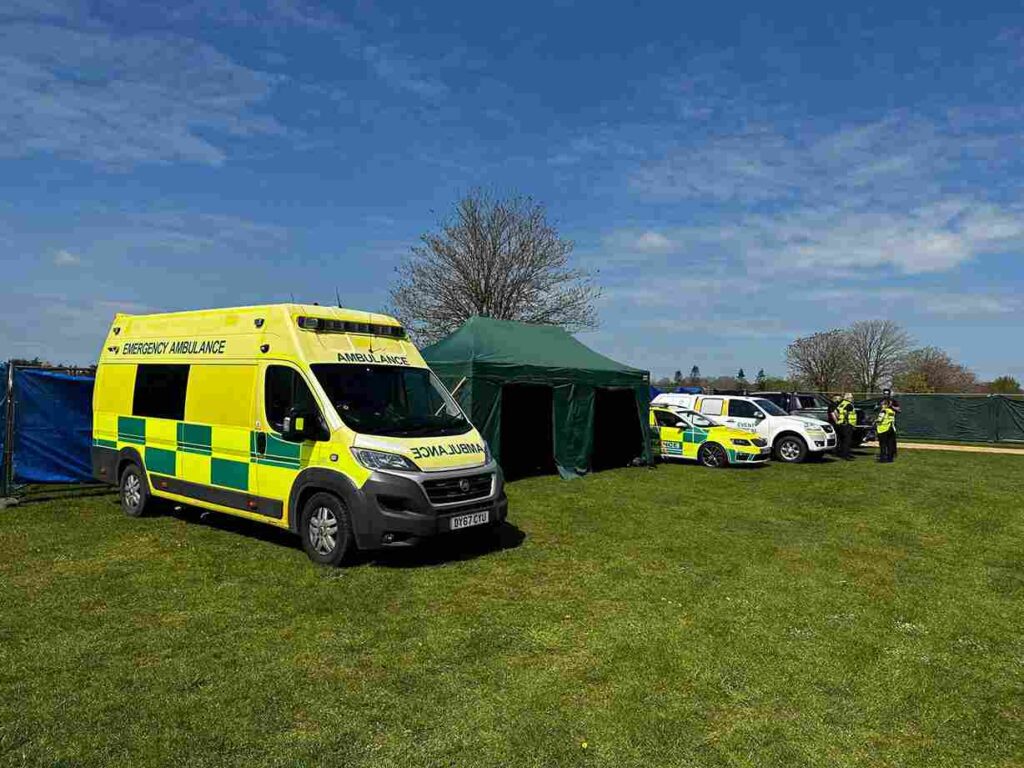
The scale and nature of an event heavily influence what duty of care actually requires in practice. A small gathering in Greenwich might reasonably need a single trained first aider, while a multi-day festival in Hackney with thousands of attendees demands a full medical team equipped with ambulances, paramedics, and clearly mapped response routes. Organisers who fail to properly assess this scale, and instead apply a one-size-fits-all approach to medical provision, are often the ones who find themselves falling short of their duty of care when an incident actually occurs.
Accounting for Weather, Alcohol, and Activity Levels
Weather, alcohol, and physical activity all heighten the risks organisers must account for. An event in Hammersmith and Fulham held during a summer heatwave carries very different risks compared to a winter market in Haringey, where cold exposure and slippery surfaces become the primary concern. Duty of care means recognising these variables in advance and ensuring event medical services are tailored accordingly, rather than assuming a generic level of cover will suffice regardless of conditions.
Protecting Vulnerable Attendees
Vulnerable attendees add another dimension to this responsibility. Family-friendly events in Harrow or Havering often attract young children, elderly relatives, and people with pre-existing health conditions, all of whom may require different levels of medical attention than a typical adult attendee. A genuine duty of care involves planning for this diversity, ensuring event medical services are equipped not just with general first aid supplies, but with the training and equipment needed to respond appropriately to a wide range of medical situations.
Why Crowd Density Tests Duty of Care Directly
Crowd density is another factor that tests an organiser’s duty of care directly. At a packed event in Hillingdon or Hounslow, simply having medical staff present isn’t enough if they can’t physically reach a casualty in time. Duty of care requires organisers to think through logistics such as clear access routes, strategically placed first aid points, and communication systems that allow medical teams to be alerted and mobilised the moment an incident occurs, regardless of how densely packed the venue becomes.
The Documentation and Accountability Side of Duty of Care
There’s also a documentation and accountability aspect to duty of care that many organisers underestimate. Local authorities across boroughs such as Islington and Kensington and Chelsea often require organisers to demonstrate, in writing, exactly how they plan to meet their medical provision obligations before a licence is granted. This isn’t simply bureaucratic box-ticking; it reflects a broader principle that duty of care must be actively planned and evidenced, not just assumed to exist because good intentions are in place.
The Consequences of Neglecting Medical Provision
Failing to uphold this duty carries consequences that extend well beyond the immediate safety risk to attendees. Organisers who neglect proper event medical services in areas like Kingston upon Thames or Lambeth can face legal liability, reputational damage, and the loss of trust from both attendees and local communities. In the aftermath of a serious incident, questions are inevitably asked about what medical provisions were in place, and inadequate answers rarely reflect well on those responsible for the event.
A Responsibility That Never Truly Ends
Ultimately, duty of care is not a checkbox to be ticked once and forgotten. It’s an ongoing responsibility that organisers carry from the earliest planning stages of an event in Lewisham through to the final attendee leaving the venue safely. Event medical services are the practical expression of this duty, translating a legal obligation into real, on-the-ground protection for everyone in attendance. Organisers who take this responsibility seriously don’t just avoid legal and reputational risk; they build events that people trust, return to, and recommend, precisely because they know their safety has genuinely been considered and protected.