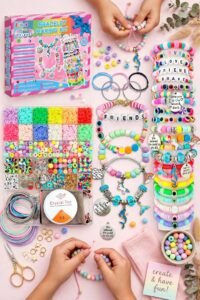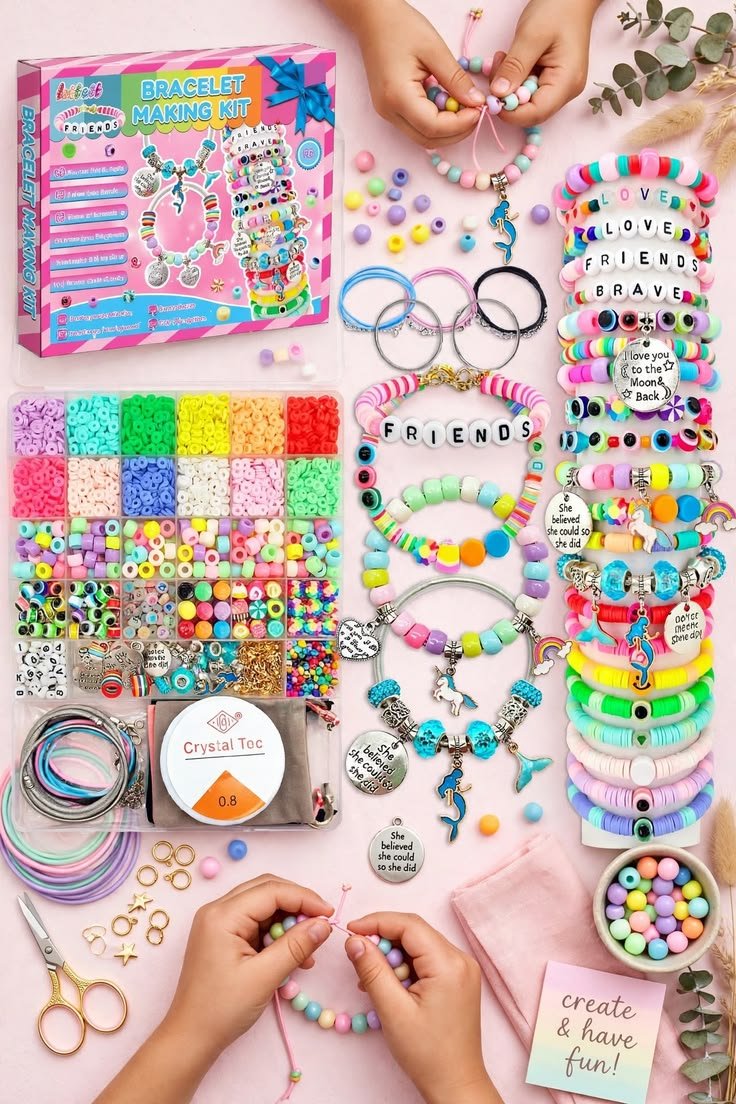
A girls bracelet making kit in Pakistan is a boxed set that gives a child the beads, string, charms and tools she needs to make her own jewelry at home. The best kit is the one that matches her age, has safe and sturdy materials, and includes enough supplies to make several bracelets without extra shopping. If you are a parent, an aunt, or a teacher searching for a gift or a rainy-day activity, this guide will help you pick wisely. You will learn what a good kit contains, how to match a kit to a child’s age, what to watch for on safety, and how to keep the activity fun once the box is open.
Nexora Mart is your trusted destination for Online Shopping in Pakistan, offering quality toys, home appliances, energy-saving fans, and everyday products at competitive prices.
What Is a Girls Bracelet Making Kit?
A bracelet making kit is a ready-to-use craft set. Everything arrives in one container, so you do not need to hunt for beads in one shop and thread in another. Most kits include colorful beads, elastic cord, letter beads or charms, and a small storage box or tray. Some add extras such as a bead spinner, a pair of small scissors, or a simple instruction card with pattern ideas.
Kits come in a few styles. Bead and string kits are the most common. Friendship bracelet kits use embroidery thread that is braided or knotted. Loom kits use a small plastic frame and rubber bands to weave patterns. Charm bracelet kits focus on metal or plastic charms that hang from a chain. Each style asks for a different skill level, so the type matters as much as the brand or price.
Which Kit Suits Which Age?
Age is the most important factor, so start here. For girls aged about four to six, choose large, chunky beads with big holes and thick elastic cord. Small fingers handle these easily, and the finished bracelet is quick to complete, which keeps young children interested. An adult should stay close during play.
For girls aged seven to ten, standard-size beads, letter beads and simple charms work well. This is the age when children enjoy spelling out names or picking color patterns. They can follow a basic card of ideas and finish a bracelet in about fifteen to twenty minutes.
For girls aged eleven and up, you can move to friendship thread kits, loom sets, or mixed-material kits with seed beads and metal charms. Older girls often want something that looks like real jewelry, not a toy. They also enjoy designing sets to share with friends. Manufacturer age labels are a useful guide, but you know your daughter best. A patient eight-year-old may enjoy a kit labeled for ten, while an easily frustrated one may prefer something simpler.
What to Look for Before You Buy
Begin with the beads. They should feel smooth, with no rough edges and no sharp seams. Check that the holes are clean and wide enough for the cord, because narrow holes are the number one cause of frustration. Glass and acrylic beads both work. Acrylic is lighter and usually cheaper, while glass looks nicer but can chip if dropped.
Next, look at the cord. Elastic cord is best for beginners because it needs no tying skill beyond a simple knot. Cheap cord can snap or lose stretch quickly, so choose a kit with thicker, springy cord if you can see it. If the cord looks thin or brittle in the packaging, the bracelets may not last.
Then count what is inside. A good kit gives enough beads to make at least five or six bracelets, not just one. Check the description or the box for the bead count, and compare it with the price. A larger, well-organized box often costs less per bracelet than a tiny one. Look for compartments too. Beads without sorting trays end up mixed together, which is tiring to clean up.
Finally, consider the container. A sturdy plastic box with a snug lid will survive school bags, travel and younger siblings. In Pakistan’s warm climate, a closed box also keeps dust off the beads and stops small parts from getting lost.
Safety Tips for Parents in Pakistan
Safety deserves a clear, honest word. Small beads are a choking risk for toddlers and very young children. If there is a child under three in your home, keep any bracelet kit well out of reach, even if it is meant for an older sister. Teach older girls to put the kit away after each session.
Check the packaging for age guidance and a note about small parts. Be careful with very cheap, unmarked sets, because you cannot easily tell what the paint or coating on the beads is made of. A kit sold with a clear label from a reputable seller is usually a safer bet. Avoid beads with flaking paint, strong chemical smells, or sticky surfaces. If a bead sheds color on your fingers when rubbed, do not let a child wear it against her skin for long.
Also think about wear. Some children have sensitive skin, and metal charms with poor plating can cause itching. If your daughter reacts to cheap jewelry, choose a kit with plastic or glass parts and skip the metal. These are general precautions, not a guarantee, so trust your own eyes and common sense when inspecting a kit.
Shop a girls bracelet making kit in Pakistan at Nexora Mart for creative DIY jewelry making and enjoyable craft activities.
Where and How to Shop for Craft Kits Locally
You can find bracelet making kits in several kinds of places. Toy shops and stationery markets in major cities often stock them, especially around Eid, birthdays and winter holidays. Online marketplaces and social media shops also sell them across the country, which helps if you live in a smaller town. Craft supply shops sometimes sell loose beads and cord, which is useful when you want to refill a kit later.
Whichever route you choose, read the full description before ordering. Look for the number of beads, the type of cord, and clear photos of the real product, not just a stock image. If a seller shows a close-up of the contents, that is a good sign. Ask about returns, because delivery damage and missing parts do happen. Compare two or three options on bead count and price, not just on the box design.
Prices vary widely depending on size, bead quality and packaging. A small starter set costs far less than a large deluxe box with hundreds of beads. Set a budget first, then pick the best contents within it. A mid-range kit with good cord and plenty of beads usually gives more joy than an expensive box padded with a few fancy charms.
Common Mistakes to Avoid
The most common mistake is buying a kit that is too advanced. A bright loom set looks exciting on the shelf, but a seven-year-old may give up after the first few rows. Honest matching of skill level prevents tears and wasted money.
Another mistake is choosing by appearance alone. A beautiful box can hide thin cord and a handful of beads. Always check the contents list. A third mistake is forgetting about refills. Once a child finishes the first set, she will want more colors. Beads and cord are cheap to restock, so keep the original box and top it up instead of buying a brand-new kit every time.
Finally, many families skip the setup. Spread a towel or a tray on the table before you begin. Beads roll, and a towel keeps them from vanishing under furniture.
Making Bracelet Time Fun and Useful
A kit is more than a gift. It can become a calm, screen-free activity that builds patience and fine motor skills. Children practice counting, color matching and following a pattern, and they get the pride of wearing something they made. Many girls enjoy making matching bracelets for a sister, cousin or classmate, which turns a craft session into a thoughtful present.
For a real-life example, imagine a ten-year-old who gets a kit for her birthday. On the first afternoon, she makes a bracelet with her name. By the weekend, she is stringing sets for her cousins. Within a month, she wants to design patterns on paper first. That steady growth is what a good kit can inspire, though every child is different, and interest may rise or fade.
To get the most from the kit, let her choose her own colors, even when the combination looks odd to you. Offer a little help with the first knot, then step back. Keep a small tray for unfinished bracelets so they are not lost between sessions.
Frequently Asked Questions
What age is best for a girls bracelet making kit?
Most kits suit children from about five to twelve years old, but the best fit depends on the bead size and the style of kit. Younger girls need large beads and an adult nearby, while older girls can handle thread, small beads and looms.
How many bracelets can I make from one kit?
It depends on the bead count and bracelet size. A basic kit usually makes three to six bracelets, while a larger set can make many more. Check the bead count on the listing and avoid guessing from the box size alone.
Are bracelet making kits safe for kids?
They are safe when used by the right age group with supervision. Small beads can be a choking hazard for toddlers, so keep kits away from children under three. Choose kits with clear labels and no flaking paint or strong smell.
Can I refill a kit when the beads run out?
Yes. Beads, elastic cord and charms are sold separately in many craft and bead shops. Keep the original box, buy refills in the colors your daughter likes, and you can use the same kit for a long time.
Start Small and Let Her Create
The right girls bracelet making kit in Pakistan comes down to three things: a kit that matches her age, safe and sturdy materials, and enough beads to keep her busy for several sessions. Do not chase the biggest box or the flashiest packaging. Pick a mid-range kit, read the contents carefully, and set up a tidy space for play. Your next step is simple. Decide on your daughter’s age group and your budget, then compare two kits by bead count and cord quality before you buy.