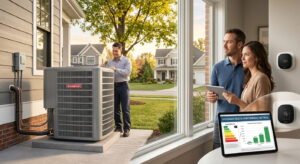
Choosing a new heating and cooling system is an important decision for any homeowner. The right equipment can help maintain indoor comfort, manage energy use, and reduce the need for frequent repairs. A goodman heat pump system is worth considering for homeowners who want one system that can provide both heating and cooling throughout the year.
Before making a purchase, homeowners should understand how the equipment works, what features are available, and how much the complete installation may cost. The AC Outlet helps homeowners and HVAC professionals explore heating and cooling equipment so they can make informed purchasing decisions. Comparing efficiency ratings, system size, warranty coverage, and installation requirements can help buyers decide whether a Goodman heat pump is the right choice for their homes.
What Is a Goodman Heat Pump System?
A Goodman heat pump system is a heating and cooling solution designed to move heat rather than generate it through traditional electric resistance heating. During warm weather, it removes heat from indoor air and releases it outside. During colder weather, it reverses the process and transfers heat from outdoor air into the home.
This two-way operation allows a single system to provide year-round temperature control. Depending on the model and home setup, a complete system may include an outdoor heat pump unit, an indoor air handler or compatible furnace, a thermostat, and other necessary components.
Goodman offers different heat pump models with varying efficiency levels and features. Some models use conventional compressors, while selected newer models offer inverter-driven technology that adjusts compressor speed to meet changing heating and cooling demands.
The best option depends on the home’s size, local climate, existing ductwork, energy costs, and comfort needs.
Why Is a Goodman Heat Pump System Worth Considering?
A Goodman heat pump may be a practical choice for homeowners who want reliable heating and cooling without installing separate primary systems for each job. Its overall value depends on the model selected, the quality of installation, and the home’s heating and cooling requirements.
Heating and Cooling in One System
One of the main advantages of a heat pump is its ability to handle both heating and cooling. Homeowners do not necessarily need a separate air conditioner and furnace for these functions, although some heat pump installations use a furnace as backup heating.
During summer, the system moves indoor heat outdoors to help keep rooms cool. During winter, it extracts available heat from outdoor air and transfers it indoors. This makes heat pumps especially useful in areas with moderate winters and long cooling seasons.
Options for Different Home Comfort Needs
Goodman offers heat pump options with different performance levels and features. Some homeowners may prefer a straightforward system for everyday comfort, while others may benefit from a higher-efficiency model with variable-speed or inverter-driven technology.
These options allow buyers to compare equipment based on their budgets and comfort expectations. The important step is selecting a model that suits the property instead of choosing equipment based on brand name alone.
What Are the Main Benefits of a Goodman Heat Pump System?
A heat pump can offer several benefits when the equipment is selected correctly and installed by a qualified HVAC professional.
Potential Energy Savings
Heat pumps move heat rather than relying entirely on electric resistance heating. Under suitable conditions, this can make them more energy-efficient than traditional electric heating methods.
However, savings are not guaranteed for every household. Electricity prices, outdoor temperatures, insulation, duct condition, thermostat settings, and the system’s efficiency rating all affect operating costs.
Homeowners replacing an older, inefficient system may notice a difference in energy use, especially when the new equipment is properly sized and installed.
Year-Round Indoor Comfort
A heat pump provides both heating and cooling through the same equipment. This can make temperature control simpler and reduce the need to manage separate heating and cooling systems.
When paired with a suitable thermostat, the system can maintain a comfortable indoor temperature throughout changing seasons. Higher-end models may also adjust their output more gradually, helping reduce temperature swings.
Different Efficiency Levels
Not every household needs the most expensive heat pump available. Goodman offers models with different efficiency ratings, allowing buyers to compare upfront costs with expected operating expenses.
SEER2 measures cooling efficiency, while HSPF2 measures heating efficiency. In general, higher ratings indicate greater efficiency under standardized testing conditions. Actual performance will still depend on installation quality, climate, and how the equipment is used.
Manufacturer Warranty Options
Warranty coverage can add value to a major HVAC purchase. Goodman offers limited warranties on eligible equipment, but the exact coverage varies by model and product category.
Buyers should check the warranty certificate before ordering. They should also confirm registration requirements, coverage periods, exclusions, and whether labor costs are covered. A parts warranty does not automatically mean that all repair or service expenses will be paid by the manufacturer.
How Energy Efficient Is a Goodman Heat Pump System?
Energy efficiency is one of the most important factors when deciding whether a heat pump is worth buying. A more efficient system can use less electricity to provide the same level of heating or cooling under comparable conditions.
Goodman offers models with different efficiency levels. Selected models feature inverter-driven compressors that adjust their speed according to the home’s current heating or cooling demand.
Understanding SEER2 and HSPF2 Ratings
SEER2 helps buyers compare the seasonal cooling efficiency of different systems. HSPF2 provides a similar comparison for heating performance.
A higher rating can indicate lower energy use under standardized test conditions, but it should not be the only factor in the buying decision. A high-efficiency unit may cost more upfront, so homeowners should compare the additional purchase cost with their expected energy savings.
A qualified HVAC professional can help estimate operating costs using the property’s location, energy rates, equipment specifications, and expected usage.
The Role of Proper System Sizing
Even an efficient heat pump can perform poorly when it is incorrectly sized.
An undersized unit may struggle to maintain the desired temperature during extreme weather. An oversized system may cycle on and off too frequently, which can affect comfort, efficiency, and equipment operation.
A professional load calculation helps determine the appropriate capacity for the home. This assessment considers factors such as floor area, insulation, windows, ceiling height, air leakage, and local weather conditions.
Can a Goodman Heat Pump System Work in Cold Weather?
Yes, a Goodman heat pump can provide heating during cold weather, but its performance depends on the specific model and the outdoor temperature.
Heat pumps generally work well in moderate winter conditions. As outdoor temperatures fall, however, the amount of heat available from the air decreases, and the system may need to work harder to maintain indoor comfort.
Choosing the Right Model for Winter
Homeowners in colder regions should check the manufacturer’s performance data for the exact model under consideration. They should pay particular attention to its heating capacity and efficiency at low outdoor temperatures rather than relying only on its general efficiency rating.
Some models are better suited to cold-weather operation than others. In areas with severe winters, a compatible backup heating source may also be necessary.
When Backup Heating May Be Needed
A heat pump system may use auxiliary electric heating or a compatible furnace when outdoor conditions make it difficult to meet the home’s heating demand.
Backup heating can improve comfort during extreme cold, but it may increase energy costs, particularly when electric resistance heat runs frequently.
Before buying, homeowners should ask their HVAC contractor how the proposed system will operate during the coldest weather in their area.
How Much Does a Goodman Heat Pump System Cost?
The total cost of a Goodman heat pump system depends on several factors. These include the model, system capacity, efficiency level, indoor equipment, installation labor, and any modifications required at the property.
A basic equipment price may not represent the full cost of a completed installation. Homeowners should compare complete project estimates rather than looking at the outdoor unit price alone.
Factors That Affect the Purchase Price
The main factors that influence the total cost include:
- System size and heating capacity.
- Standard or higher-efficiency equipment.
- Conventional or inverter-driven technology.
- Indoor air handler or compatible furnace requirements.
- Thermostat and control upgrades.
- Ductwork repairs or modifications.
- Electrical work, permits, and installation labor.
- Removal and disposal of old equipment.
The final price can vary significantly from one property to another. Buyers should request an itemized quote that clearly separates equipment, installation, accessories, and any additional work.
How to Compare Value and Long-Term Costs
The lowest-priced option is not always the least expensive choice over time. A system with a higher purchase price may offer lower operating costs, but the difference depends on actual efficiency, energy rates, and household usage.
Homeowners should compare the upfront price, estimated annual energy use, warranty coverage, expected maintenance, and possible repair expenses.
The AC Outlet can help buyers explore available HVAC equipment and compare product specifications. Installation costs and system suitability should be confirmed with a qualified local contractor.
What Should Homeowners Know About Goodman Heat Pump Installation?
Installation quality is just as important as the equipment itself. A properly selected heat pump can still deliver disappointing results if the indoor and outdoor components are mismatched or the system is installed incorrectly.
Use Compatible Indoor and Outdoor Equipment
The heat pump should be matched with compatible indoor equipment according to the manufacturer’s requirements. The selected combination should meet applicable performance and certification requirements.
Homeowners should ask the contractor to confirm the model numbers and verify that the proposed combination is suitable for the property.
Check the Existing Ductwork
Ductwork carries heated and cooled air throughout the home. Leaks, poor insulation, blockages, and incorrect duct sizing can reduce comfort and waste energy.
Before installing a new heat pump, the contractor should inspect the existing duct system and identify any problems that could affect airflow.
Choose a Qualified HVAC Contractor
Heat pump installation involves electrical connections, refrigerant lines, system charging, airflow adjustments, and safety checks. These tasks should be completed by appropriately qualified professionals.
The contractor should also explain the thermostat settings, filter requirements, maintenance schedule, and warranty registration process. A clear installation plan helps homeowners understand what to expect before the work begins.
How Can Homeowners Maintain a Goodman Heat Pump System?
Routine maintenance helps a heat pump operate as intended and can identify small problems before they become expensive repairs.
Replace or Clean Air Filters
Air filters collect dust and other particles that would otherwise enter the system. A dirty filter can restrict airflow and make heating and cooling less effective.
Homeowners should check the filter regularly and follow the recommended replacement or cleaning schedule. The correct schedule depends on the filter type, household conditions, pets, and system usage.
Keep the Outdoor Unit Clear
Leaves, grass, dirt, and other debris can restrict airflow around the outdoor unit. The area should be kept clear according to the manufacturer’s required clearances.
Homeowners should avoid bending the coil fins or using harsh cleaning methods. A qualified technician can inspect and clean the outdoor coil when needed.
Schedule Professional Inspections
A professional maintenance visit can include checking electrical connections, inspecting coils, verifying airflow, examining refrigerant-related performance, and testing system operation.
The technician can also check the thermostat and identify unusual noises or signs of wear. Regular maintenance does not prevent every possible breakdown, but it can help support reliable performance.
What Are the Potential Disadvantages of a Goodman Heat Pump System?
Although a Goodman heat pump can offer useful benefits, it may not be the ideal choice for every homeowner.
Upfront Costs Can Be Significant
Buying and installing a complete heat pump system requires an initial investment. Higher-efficiency models and systems that need extensive ductwork or electrical upgrades can cost more.
Homeowners should compare several itemized quotes and consider the long-term operating costs before making a decision.
Performance Depends on Climate
Heat pumps transfer heat from the outdoor air, so their heating performance changes with outdoor conditions. A model that works well in a moderate climate may not provide the same results in a region with very low winter temperatures.
Choosing a model designed for local weather conditions is essential.
Installation and Maintenance Still Matter
No HVAC brand can guarantee trouble-free operation. Equipment can develop problems because of wear, poor installation, insufficient maintenance, or unsuitable system sizing.
Homeowners should consider the availability of qualified service professionals, replacement parts, and warranty support in their area before purchasing.
Is a Goodman Heat Pump System Better Than Other Brands?
The best heat pump brand depends on the buyer’s needs, budget, and local service options. Goodman is one option worth comparing with other manufacturers, but no single brand is automatically the best choice for every home.
Compare Features Instead of Brand Names Alone
Homeowners should compare efficiency ratings, heating performance, noise levels, compressor technology, warranty terms, and total installed costs.
They should also consider whether the equipment includes the features they actually need. Paying more for advanced controls or higher efficiency may be worthwhile for some households but unnecessary for others.
Consider Installation Support and Warranty Terms
A strong warranty is useful, but homeowners should understand what it covers and what it excludes. They should also confirm whether local contractors can install and service the selected equipment.
The final decision should be based on the complete system, the contractor’s installation plan, and the expected cost of ownership rather than brand reputation alone.
Who Should Buy a Goodman Heat Pump System?
A Goodman heat pump may suit homeowners who want a combined heating and cooling solution, have a compatible duct system, and can choose a model that meets their local climate requirements.
It may also appeal to buyers who want to compare equipment at different efficiency and price levels rather than focusing exclusively on premium features.
However, homeowners with very demanding heating requirements should carefully review low-temperature performance and backup heating options. Those with major ductwork problems should address those issues before expecting a new heat pump to improve comfort.
The most suitable system is one that meets the property’s heating and cooling needs, fits the household budget, and can be installed and maintained properly.
Conclusion: Is a Goodman Heat Pump System Worth Buying Today?
A Goodman heat pump system can be a worthwhile investment for homeowners who want year-round heating and cooling, suitable energy efficiency, and a choice of equipment options at different performance levels. Its overall value depends on the selected model, local climate, electricity prices, installation quality, and long-term maintenance.
Before purchasing, homeowners should compare efficiency ratings, verify warranty details, obtain a professional system-sizing assessment, and request a complete installation estimate. These steps help reduce the risk of choosing equipment that does not meet the home’s needs.
The AC Outlet provides an opportunity for buyers to explore Goodman HVAC equipment and review available product specifications. With careful research and guidance from a qualified HVAC professional, homeowners can determine whether a Goodman heat pump offers the right balance of comfort, performance, and long-term value for their property.
Here, you can find more articles.