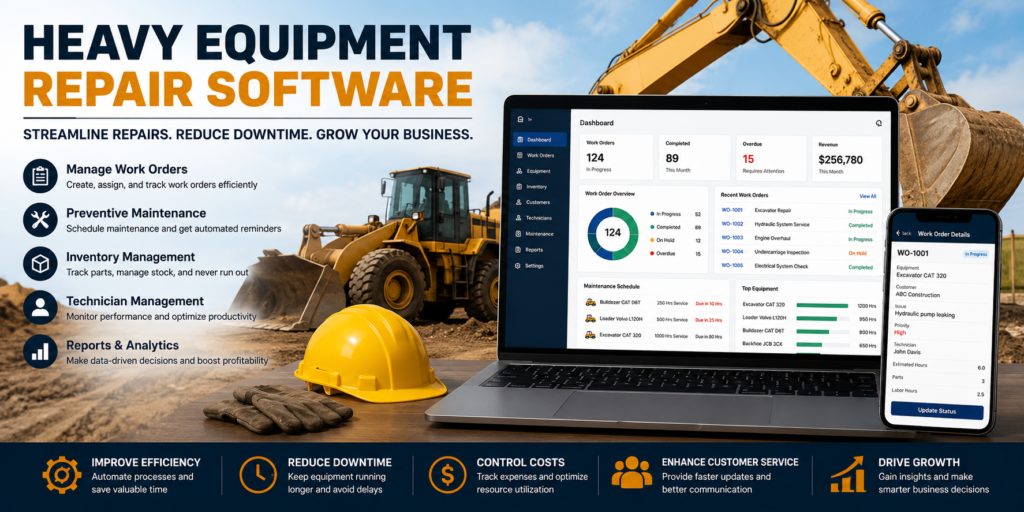
Heavy Equipment Repair Software: Features, Benefits, and Best Practices for Success
The heavy equipment industry is the backbone of sectors such as construction, mining, agriculture, transportation, forestry, and industrial manufacturing. Businesses operating in these industries rely on powerful machinery to complete demanding tasks efficiently and safely. However, maintaining and repairing heavy equipment is a complex process that requires careful planning, accurate recordkeeping, skilled technicians, and effective resource management.
As fleets expand and equipment becomes more technologically advanced, traditional methods of managing repairs and maintenance are no longer sufficient. Paper records, spreadsheets, and manual scheduling systems often lead to errors, missed maintenance intervals, inventory shortages, and communication gaps. These challenges can result in costly downtime and reduced productivity.
This is where heavy equipment repair software becomes an essential business tool. Designed specifically for equipment service providers and repair facilities, this software helps streamline daily operations, improve maintenance management, enhance customer service, and increase profitability. By centralizing critical information and automating repetitive tasks, businesses can focus more on delivering high-quality repairs and less on administrative work.
Understanding the features, benefits, and implementation best practices of heavy equipment repair software can help repair businesses make smarter decisions and stay competitive in an increasingly digital industry.
Understanding Heavy Equipment Repair Software
What Is Heavy Equipment Repair Software?
Heavy equipment repair software is a specialized management solution created to help repair shops and service providers handle equipment maintenance and repair operations more efficiently. Unlike general business software, these platforms are built specifically for businesses that work with construction equipment, agricultural machinery, industrial machines, and other heavy-duty assets.
The software serves as a centralized platform where users can manage work orders, track maintenance schedules, monitor inventory, record repair histories, generate invoices, communicate with customers, and analyze business performance. Instead of juggling multiple systems, repair shops can access all critical information from a single interface.
Why the Industry Needs Specialized Software
Heavy equipment repairs often involve large and expensive assets that require extensive documentation and detailed service records. Equipment owners expect fast turnaround times and accurate maintenance histories. Specialized software helps businesses meet these expectations while improving operational efficiency.
Without a dedicated solution, repair shops may struggle with disorganized records, delayed repairs, and inefficient workflows. Heavy equipment repair software helps eliminate these challenges by creating a structured and automated approach to service management.
Key Features of Heavy Equipment Repair Software
Work Order Management
Work order management is one of the most important features of heavy equipment repair software. Every repair begins with a work order that outlines the equipment issue, required repairs, labor assignments, parts usage, and completion status.
Modern software allows managers to create digital work orders, assign technicians, track progress, and update repair statuses in real time. This improves communication between departments and ensures everyone involved in the repair process has access to accurate information.
Preventive Maintenance Scheduling
Preventive maintenance is essential for extending equipment lifespan and reducing unexpected breakdowns. Heavy equipment repair software helps businesses schedule maintenance activities based on operating hours, mileage, usage patterns, or calendar intervals.
Automated reminders ensure maintenance tasks are completed on time, reducing the likelihood of expensive equipment failures and emergency repairs.
Equipment Service History Tracking
Detailed service records provide valuable insights into equipment performance and maintenance trends. Software platforms maintain complete repair histories, including previous work orders, inspection reports, replaced components, technician notes, and maintenance schedules.
Having easy access to historical data helps technicians diagnose recurring problems more accurately and allows managers to make informed maintenance decisions.
Inventory and Parts Management
Managing parts inventory effectively is critical for repair businesses. Running out of essential components can delay repairs, while excessive inventory ties up valuable capital.
Heavy equipment repair software provides real-time inventory tracking, automatic stock updates, reorder alerts, and supplier management tools. These capabilities help businesses maintain optimal inventory levels while minimizing waste and unnecessary spending.
Technician Management
Technician productivity directly impacts shop performance and profitability. Software systems allow managers to assign jobs, monitor labor hours, track technician performance, and evaluate workload distribution.
This visibility helps optimize resource allocation and ensures repair jobs are completed efficiently.
Invoicing and Financial Management
Accurate invoicing is crucial for maintaining healthy cash flow. Heavy equipment repair software simplifies billing by automatically generating invoices based on completed work orders, labor costs, and parts usage.
Many platforms also integrate with accounting systems, making financial management more accurate and efficient.
Mobile Accessibility
Today’s repair operations often extend beyond the shop floor. Field technicians frequently perform inspections, diagnostics, and repairs at customer locations.
Mobile-friendly software enables technicians to access work orders, update repair information, capture photos, and communicate with managers directly from smartphones or tablets. This flexibility improves efficiency and reduces paperwork.
Benefits of Using Heavy Equipment Repair Software
Increased Operational Efficiency
One of the most significant benefits of heavy equipment repair software is improved efficiency. Automation reduces the time spent on administrative tasks such as scheduling, paperwork, inventory tracking, and report generation.
Employees can focus more on productive work, resulting in faster service delivery and improved shop performance.
Reduced Equipment Downtime
Downtime is one of the most costly challenges facing equipment owners. Every hour a machine remains out of service can affect project timelines and profitability.
By improving maintenance scheduling, parts availability, and repair coordination, software helps businesses complete repairs more quickly and keep equipment operational.
Better Customer Service
Customers appreciate transparency and timely communication. Heavy equipment repair software enables businesses to provide accurate estimates, maintenance updates, and detailed service records.
Improved communication builds trust and strengthens customer relationships, increasing the likelihood of repeat business.
Improved Profitability
Efficient operations often lead to higher profitability. By reducing downtime, improving technician productivity, optimizing inventory management, and streamlining billing processes, repair shops can increase revenue while controlling costs.
The result is a healthier bottom line and stronger business performance.
Data-Driven Decision Making
Modern software platforms generate valuable reports and analytics that help business owners understand performance trends. Managers can monitor key metrics such as labor utilization, repair turnaround times, inventory turnover, and revenue growth.
These insights support strategic planning and continuous improvement initiatives.
Choosing the Right Heavy Equipment Repair Software
Assess Your Business Requirements
Before selecting a software solution, businesses should evaluate their specific needs. A small repair shop may prioritize work order management and invoicing, while a larger operation may require advanced inventory controls, multi-location management, and fleet maintenance capabilities.
Understanding operational challenges helps narrow the list of potential solutions.
Consider Scalability
A software investment should support future growth. As businesses expand, they often require additional users, equipment records, customer accounts, and service locations.
Choosing a scalable solution ensures the platform can accommodate growth without requiring a costly replacement.
Evaluate Ease of Use
User adoption is a critical factor in software success. Even the most powerful system can become ineffective if employees find it difficult to use.
Businesses should look for intuitive interfaces, clear navigation, and accessible training resources when evaluating software options.
Examine Customer Support and Training
Reliable customer support can significantly impact implementation success. Vendors that provide onboarding assistance, training programs, technical support, and ongoing education often help businesses achieve better results.
Real-World Applications
Supporting Construction Equipment Maintenance
Construction companies rely on excavators, bulldozers, loaders, and other heavy machinery to complete projects efficiently. Repair shops serving these industries use software to track maintenance schedules, monitor repairs, and manage equipment histories.
This proactive approach reduces breakdowns and helps contractors maintain project timelines.
Managing Large Repair Operations
Larger repair facilities often handle dozens of jobs simultaneously. Coordinating technicians, parts inventories, and customer communications manually can become overwhelming.
Many service providers have adopted specialized platforms such as Fullbay to improve workflow visibility, manage repairs more effectively, and create a more organized service environment.
Best Practices for Successful Implementation
Train Employees Thoroughly
Proper training is essential for maximizing software benefits. Every employee who interacts with the system should understand how to perform daily tasks efficiently.
Comprehensive onboarding and ongoing education help ensure consistent software usage across the organization.
Standardize Shop Processes
Implementing software presents an excellent opportunity to establish standardized workflows. Consistent procedures improve efficiency, reduce errors, and make performance measurement more accurate.
Maintain Accurate Data Entry
The quality of reporting and analytics depends on the accuracy of entered information. Repair shops should establish data entry standards and regularly review records for consistency.
Monitor Key Performance Indicators
Successful businesses continuously evaluate performance. Tracking metrics such as technician productivity, repair turnaround times, labor efficiency, and customer retention can reveal valuable opportunities for improvement.
Common Mistakes to Avoid
Focusing Only on Price
While budget considerations are important, choosing software based solely on cost can create limitations later. Businesses should focus on long-term value rather than short-term savings.
Ignoring Employee Input
Technicians, service advisors, and managers often have valuable insights into operational needs. Involving employees in the selection process can improve adoption and satisfaction.
Delaying Software Updates
Regular updates often include security enhancements, performance improvements, and new features. Keeping software current helps businesses maximize their investment.
Emerging Trends in Heavy Equipment Repair Software
Cloud-Based Solutions
Cloud technology continues to reshape the repair industry. Cloud-based platforms provide secure access to information from virtually any location while reducing infrastructure costs.
Artificial Intelligence and Predictive Maintenance
Artificial intelligence is helping businesses identify maintenance needs before equipment failures occur. Predictive analytics can improve reliability and reduce downtime significantly.
Telematics Integration
Connected equipment generates valuable operational data. Integrating telematics with repair software provides real-time insights into machine health and maintenance requirements.
Mobile-First Service Management
As mobile technology becomes increasingly important, software vendors are prioritizing mobile functionality that supports technicians in the field and improves communication across teams.
Conclusion
The heavy equipment repair industry continues to evolve as equipment becomes more advanced and customer expectations increase. Repair businesses that rely on outdated systems often struggle with inefficiencies, communication challenges, and unnecessary downtime.
Heavy equipment repair software provides a comprehensive solution for managing work orders, maintenance schedules, inventory, technician productivity, customer communication, and financial operations. By investing in the right platform and following proven implementation practices, repair businesses can improve efficiency, reduce costs, enhance customer satisfaction, and position themselves for long-term success.
As technology continues to transform the service industry, adopting heavy equipment repair software is no longer simply an operational improvement—it is a strategic investment in the future growth and competitiveness of the business.