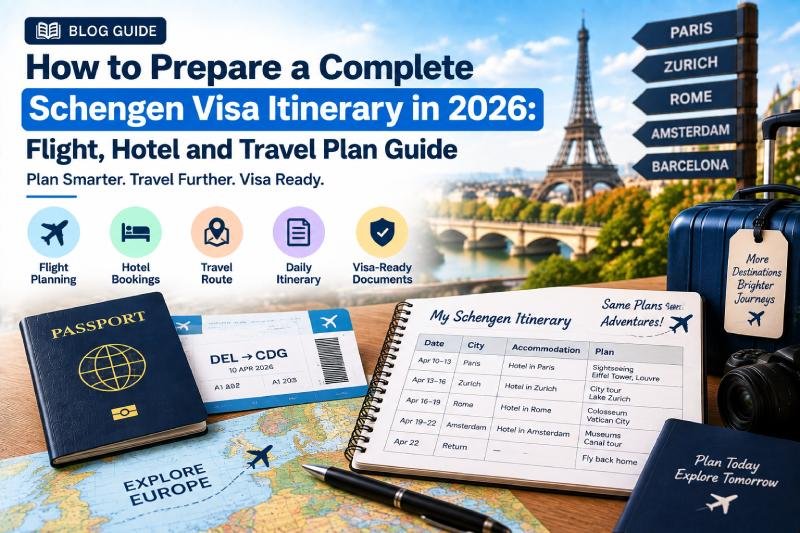
Planning a trip to Europe requires more than choosing destinations and booking attractions. When applying for a Schengen visa, travelers need to present a clear travel plan that explains where they will go, where they will stay, and how they intend to move between destinations.
A properly prepared Schengen Visa Itinerary helps organize your travel information and connects different parts of your visa application, including flight arrangements, accommodation details, travel insurance, and the purpose of your visit.
Many applicants also prepare supporting travel documents such as flight reservations and hotel confirmations before their embassy appointment. Services like Schengen Visa Flight Reservation can help travelers arrange flight documentation when they need to show their intended travel plans without immediately purchasing expensive airline tickets before visa approval.
However, an itinerary is not simply a list of cities. A strong travel plan should be realistic, match your supporting documents, and clearly explain your proposed journey. A complicated itinerary with unrealistic travel schedules may create confusion during the application review.
This guide explains how to create a complete Schengen visa itinerary in 2026, including flight planning, hotel arrangements, daily travel schedules, and common mistakes applicants should avoid.
What Is a Schengen Visa Itinerary?
A Schengen visa itinerary is a detailed outline of your planned European trip.
It usually includes:
- Countries you plan to visit
- Cities you will stay in
- Arrival and departure dates
- Flight details
- Accommodation information
- Transportation between destinations
- Planned activities
The purpose of an itinerary is to show that your travel plan is organized and realistic.
For example, a 12-day European holiday might include:
Day 1–4: Paris, France
Day 5–8: Zurich, Switzerland
Day 9–12: Milan, Italy
This gives a clear picture of how the trip is structured.
Why Is a Travel Itinerary Important for a Schengen Visa?
A visa officer reviews multiple documents to understand the purpose and practicality of your journey.
An itinerary helps connect:
- Flight reservation
- Hotel booking
- Travel insurance
- Cover letter
- Visa application form
For example:
Your application states that you are visiting France for tourism.
Your itinerary shows:
- Paris sightseeing
- Museum visits
- Local attractions
- Hotel stay in Paris
Your flight and hotel documents support the same dates.
This creates a consistent travel story.
What Information Should a Schengen Visa Itinerary Include?
A complete itinerary does not need to be unnecessarily complicated.
The important details include:
Traveler Information
Include:
- Full name
- Number of travelers
Travel Dates
Mention:
- Departure date
- Arrival date
- Return date
Countries and Cities
Clearly mention:
- Entry country
- Main destinations
- Departure country
Transportation Details
Include:
- International flights
- Internal transportation
- Train or bus routes if applicable
Accommodation Details
Mention:
- Hotel names
- Cities
- Stay dates
Planned Activities
Add general activities such as:
- Sightseeing
- Cultural visits
- Business meetings
- Family visits
Avoid creating an unrealistic hour-by-hour schedule.
Step 1: Decide Your Main Schengen Destination
Before creating your itinerary, decide the purpose and structure of your trip.
If you plan to visit multiple Schengen countries, identify your main destination according to the applicable Schengen visa rules.
For example:
Option 1
France: 8 days
Italy: 4 days
Switzerland: 3 days
France is the longest stay destination.
Option 2
Italy: 7 days
France: 7 days
The applicant should review the relevant rules to determine where the application should be submitted.
Always check the latest instructions from the appropriate authorities.
Step 2: Plan Your Flight Details
Your flight plan forms the beginning and end of your itinerary.
A typical round-trip flight includes:
Example:
Departure
Mumbai → Paris
10 September 2026
Return
Paris → Mumbai
22 September 2026
For multi-country trips:
Example:
Mumbai → Paris
Travel within Europe:
Paris → Zurich → Milan
Return:
Milan → Mumbai
The route should match your travel purpose and overall itinerary.
Step 3: Create Your Hotel Plan
Accommodation is another important part of your travel plan.
Your hotel details should match your dates.
Example:
Paris
10 September – 14 September
Zurich
14 September – 18 September
Milan
18 September – 22 September
Your hotel reservations should not create unexplained gaps.
If you are staying with relatives or friends, include appropriate supporting information where required.
Step 4: Add Your Daily Travel Plan
A daily itinerary helps explain how you plan to spend your trip.
However, it does not need to include every hour.
A simple format works well.
Example:
Day 1: Arrival in Paris
- Airport arrival
- Hotel check-in
- Local exploration
Day 2: Paris Sightseeing
- Eiffel Tower visit
- Louvre Museum
- City tour
Day 3: Paris Cultural Activities
- Historical locations
- Local attractions
This gives context without making the itinerary unrealistic.
Step 5: Match Your Itinerary With Travel Insurance
Travel insurance is another important part of many Schengen visa applications.
Your insurance dates should correspond with your planned travel period according to the applicable requirements.
Example:
Flight:
10 September – 22 September
Hotel:
10 September – 22 September
Insurance:
10 September – 22 September
When all documents follow the same timeline, the application becomes easier to understand.
Example of a Complete Schengen Visa Itinerary
Here is a simple example.
Applicant
Rahul Sharma
Travel Purpose
Tourism
Duration
15 Days
Day 1–5: Paris, France
Arrival:
Delhi → Paris
Hotel:
Paris accommodation
Activities:
- Eiffel Tower
- Louvre Museum
- Seine River cruise
Day 6–10: Zurich, Switzerland
Travel:
Paris → Zurich
Hotel:
Zurich accommodation
Activities:
- City tour
- Lake Zurich
- Nearby attractions
Day 11–15: Rome, Italy
Travel:
Zurich → Rome
Hotel:
Rome accommodation
Activities:
- Colosseum
- Vatican City
- Historical sites
Return:
Rome → Delhi
This type of structure clearly explains the proposed journey.
Flight Reservation vs Confirmed Flight Ticket for Itinerary
Many applicants are confused about whether they need to buy tickets before visa approval.
A flight reservation generally shows:
- Proposed route
- Travel dates
- Passenger details
- Flight information
A confirmed ticket represents a completed purchase.
Before buying expensive airline tickets, travelers should understand the requirements applicable to their application.
Many applicants prefer arranging travel documentation first and purchasing final tickets after receiving their visa decision.
Common Mistakes When Creating a Schengen Visa Itinerary
1. Creating an Unrealistic Travel Schedule
Example:
Visiting five countries in five days.
A realistic itinerary is easier to explain.
2. Different Dates Across Documents
Check that:
- Flight dates
- Hotel dates
- Insurance dates
- Application dates
are consistent.
3. Adding Too Many Details
An itinerary should be clear, not confusing.
Avoid unnecessary information that does not support your travel purpose.
4. Ignoring Travel Time Between Countries
Consider realistic transportation time.
For example:
Paris to Zurich requires travel planning.
Do not schedule activities immediately after a long journey without considering timing.
5. Using Old Travel Information
Make sure your itinerary matches your current plans.
Do not submit outdated documents.
How to Prepare an Itinerary for Different Types of Schengen Travel
Tourism Trip
Include:
- Tourist attractions
- Cities
- Hotels
- Travel dates
Business Trip
Include:
- Meetings
- Conferences
- Company visits
- Business locations
Family Visit
Include:
- Host details
- Address
- Visit duration
Student Travel
Include:
- Institution details
- Arrival plan
- Accommodation
The itinerary should always match the purpose stated in the visa application.
How Many Countries Should You Include in Your Schengen Itinerary?
There is no fixed number.
The best itinerary is one that matches:
- Your available travel days
- Budget
- Travel purpose
- Transportation options
A 10-day trip covering two or three countries may be easier to explain than an unrealistic plan covering eight countries.
Quality is more important than quantity.
Should Your Itinerary Include Train and Bus Details?
For multi-country trips, adding transportation details can improve clarity.
Example:
Paris → Zurich
Transport:
High-speed train
Zurich → Milan
Transport:
Train journey
These details help explain how you plan to move between destinations.
How Early Should You Prepare a Schengen Visa Itinerary?
Start planning early, but prepare final documents carefully.
Early planning helps you decide:
- Countries
- Travel dates
- Budget
- Accommodation
Before submission, review:
- Flight details
- Hotel dates
- Insurance period
- Travel route
Make sure everything represents your current plan.
Can Your Itinerary Change After Visa Approval
Travel plans can change after approval.
Airlines, hotels, and schedules may change for many reasons.
However, applicants should always provide genuine travel information during the visa application process.
If your plans change significantly, understand whether any additional steps are required.
Checklist Before Submitting Your Schengen Visa Itinerary
Before your appointment, check:
✅ Travel dates are correct
✅ Entry and exit points are clear
✅ Countries and cities are listed properly
✅ Flight details match the plan
✅ Hotels match the stay period
✅ Insurance covers the intended trip
✅ Daily activities are realistic
✅ Cover letter matches the itinerary
Frequently Asked Questions
What is a Schengen visa itinerary?
A Schengen visa itinerary is a document explaining your planned European journey, including destinations, dates, accommodation, transportation, and activities.
Do I need a detailed daily itinerary for a Schengen visa?
A simple travel plan is usually sufficient. It should clearly explain your journey without unnecessary details.
Should my flight and hotel dates match my itinerary?
Yes, your documents should create a consistent travel timeline.
Can I visit multiple Schengen countries?
Yes, travelers can plan multi-country trips if their itinerary follows the applicable Schengen visa rules.
Do I need to buy flight tickets before submitting my application?
Requirements vary. Travelers should check the specific instructions for their application before purchasing expensive tickets.
Can I change my itinerary after getting the visa?
Travel plans can change, but travelers should follow any applicable visa conditions.
Final Thoughts
A well-prepared Schengen visa itinerary does more than list destinations. It connects your flight plans, accommodation, travel purpose, and supporting documents into one clear journey.
The strongest itineraries are realistic, organized, and consistent.
Before your embassy appointment in 2026, review every detail carefully. Make sure your flights, hotels, insurance, and travel schedule support the same plan.
A clear travel itinerary helps present your application in a structured way and makes the preparation process easier for your European journey.