Modern cars are more dependent on electronic systems than ever before. Engine management, braking systems, transmission controls, emissions equipment, airbags and many comfort features can all contain sensors and electronic control units. When something goes wrong, the cause is not always visible during a routine inspection.
This is where a car diagnostic test can be useful. Rather than relying solely on symptoms or visual checks, diagnostic equipment can communicate with a vehicle’s onboard computer systems and retrieve fault information. The results can help technicians understand what may be happening and decide which further checks are necessary.
For drivers across the UK, understanding how vehicle diagnostics work can make it easier to respond to warning lights, unusual driving behaviour and intermittent faults before they develop into more serious problems.
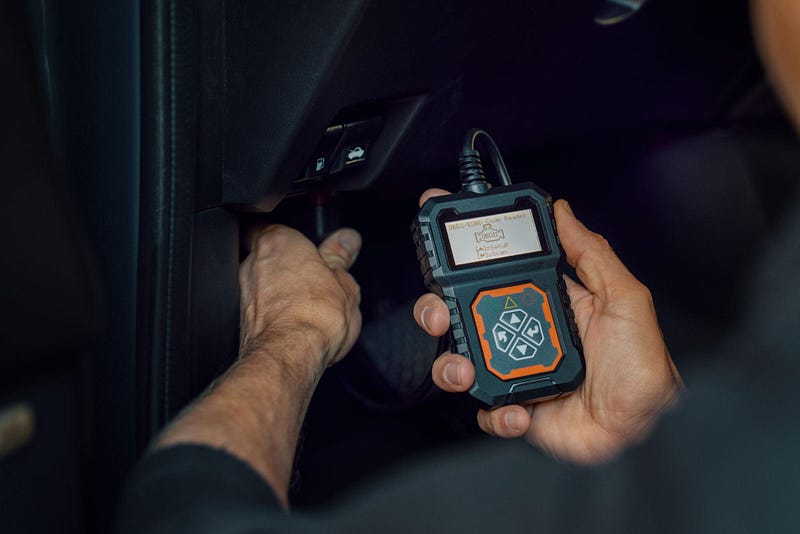
What Is a Car Diagnostic Test?
A car diagnostic test involves connecting specialised diagnostic equipment to a vehicle’s electronic control systems. Most modern vehicles use an onboard diagnostics system, commonly accessed through an OBD or OBD-II diagnostic connection.
When a fault occurs, the vehicle may store a diagnostic trouble code (DTC). A diagnostic scanner can retrieve these codes and provide information that helps a technician investigate the underlying issue.
However, an important point is often misunderstood: a fault code is not necessarily a complete diagnosis.
For example, a code relating to an oxygen sensor does not automatically mean the sensor itself needs replacing. The underlying problem could involve wiring, an electrical connection, an air or exhaust leak, fuel delivery, or another component affecting the sensor’s readings.

A professional diagnostic process therefore combines electronic scan results with technical knowledge, physical inspection and, where necessary, additional testing.
Why Vehicle Diagnostics Have Become More Important
The increasing complexity of vehicles has changed the way faults are identified and repaired.
Older vehicles could often be assessed primarily through mechanical inspection. Modern vehicles still require mechanical knowledge, but technicians increasingly need to understand electronic systems as well.
Common systems that may be monitored electronically include:
- Engine management
- Automatic and automated transmissions
- Anti-lock braking systems (ABS)
- Electronic stability control
- Airbag and restraint systems
- Diesel emissions systems
- Exhaust and emissions sensors
- Electric power steering
- Parking sensors and driver-assistance systems
- Battery and charging systems
- Hybrid and electric vehicle components
This development means that a warning light should not simply be ignored because the vehicle still appears to drive normally.

A diagnostic scan can provide useful information about stored, pending or historical faults and help establish whether further investigation is warranted.
When Should You Consider a Diagnostic Check?
Drivers often search for a car diagnostic test Near Me after a warning light appears. That is a sensible starting point, but diagnostics can also be useful when there is no obvious dashboard warning.
Some situations that may justify a diagnostic assessment include:
Warning lights
An illuminated engine management, ABS, airbag or other system warning light should be investigated according to the vehicle manufacturer’s guidance.
Poor engine performance
Loss of power, hesitation, rough idling, difficulty starting or unusual acceleration may have electronic or mechanical causes. Diagnostic information can help narrow the possibilities.
Reduced fuel economy
A sudden change in fuel consumption can sometimes be associated with sensor, fuelling, ignition or emissions-related problems. A diagnostic check can form part of a wider investigation.
Intermittent faults
Some problems appear only under particular conditions. A stored fault code or freeze-frame information may provide useful clues even if the problem is not present when the vehicle reaches a workshop.
Unusual electrical behaviour
Issues involving charging, battery management, sensors or electronic modules can be difficult to identify through visual inspection alone.

Before purchasing a used vehicle
A diagnostic scan can be one part of a used-car assessment. It should not replace a full mechanical inspection, road test, service-history review and checks of the vehicle’s condition, but it may reveal useful information about electronic systems.
What Happens During a Professional Diagnostic Process?
A proper diagnostic assessment usually involves more than simply plugging in a scanner and reading a code.
The process may include:
1. Discussing the symptoms
The technician first needs to understand what the driver has noticed. When did the problem begin? Does it happen when the engine is cold or warm? Does it occur during acceleration, braking or starting?
This information can be as valuable as the scan itself.
2. Connecting diagnostic equipment
The vehicle’s diagnostic interface is accessed and compatible equipment is connected. Depending on the vehicle, the technician may be able to communicate with multiple control modules.

3. Reading fault information
Stored and pending diagnostic trouble codes can be retrieved. Some systems may also provide live data, system status and other information.
4. Interpreting the results
The technician considers the codes alongside the symptoms and vehicle-specific information. This is where experience matters. A code identifies an area requiring attention; it does not automatically identify the failed component.
5. Carrying out additional tests
Depending on the findings, further investigation may involve checking wiring, connectors, sensors, fluid levels, vacuum systems, battery voltage, charging performance or mechanical components.
6. Confirming the repair
After a repair, the vehicle may be tested again to determine whether the original fault has been resolved and whether relevant fault information has returned.
This systematic approach reduces the risk of replacing parts unnecessarily.
Common Diagnostic Challenges and How to Avoid Them
One of the biggest challenges with modern diagnostics is confusing a fault code with a confirmed component failure.

For example, replacing a sensor simply because a diagnostic scanner reports a sensor-related code may not solve the problem. Electrical faults, damaged wiring, poor connections and problems elsewhere in the system can create similar symptoms.
Another challenge is using equipment that has limited vehicle coverage. Basic code readers may provide useful information, but professional diagnostic equipment can often access a wider range of manufacturer-specific systems and data.
Drivers can help technicians by providing accurate information, including:
- When the fault first appeared
- Whether a warning light is permanent or intermittent
- Whether the vehicle loses power
- Any unusual noises, smells or vibrations
- Recent servicing or repairs
- Whether the problem occurs only under particular driving conditions
- Any previous warning lights or diagnostic work
Good communication can make the diagnostic process more efficient.
Choosing a Diagnostic Service in the UK
Someone looking for a car diagnostic test UK service should consider more than whether a workshop owns a diagnostic scanner.
Useful questions include:
- Does the workshop have equipment suitable for the vehicle?
- Can technicians interpret diagnostic information rather than simply provide fault codes?
- Are mechanical and electrical checks available when required?
- Will the findings be explained clearly?
- Is additional testing recommended before parts are replaced?
- Does the service cover the vehicle’s make, model and relevant systems?

Local searches can also help motorists find workshops with suitable diagnostic capabilities. For drivers in Wiltshire, information about car diagnostic Trowbridge services can be found through S&M Auto Service’s dedicated diagnostic resource.
The objective should be accurate fault identification rather than simply clearing a warning light. Clearing codes without identifying the underlying cause may only make the warning disappear temporarily.
The Role of Diagnostics in Preventive Vehicle Maintenance
Diagnostics are not a replacement for routine servicing. Oil changes, brake inspections, tyre checks, fluid inspections, timing-system maintenance and other manufacturer-recommended work remain important.
However, electronic diagnostics can complement conventional maintenance by identifying information that may not be visible during a standard inspection.
As vehicles become increasingly connected and electronically controlled, diagnostic capability is likely to become an even more important part of automotive servicing. Hybrid and electric vehicles also introduce additional electronic systems and high-voltage components that require appropriate training and safety procedures.
For motorists, the practical lesson is simple: a warning light or unusual vehicle behaviour should be treated as useful information rather than something to ignore.

Final Takeaway
A diagnostic scan is most valuable when it forms part of a structured investigation. Modern diagnostic systems can provide technicians with detailed information about vehicle electronics, but interpreting that information correctly requires experience and supporting tests.
Whether a driver is responding to a warning light, investigating an intermittent fault or checking a used vehicle, diagnostics can help establish where further attention is needed.
The best approach is not to treat a fault code as the answer, but as a clue. Combined with professional inspection, live data, technical testing and the driver’s description of the symptoms, diagnostic information can make vehicle fault-finding more accurate and help prevent unnecessary repairs.
- Read More :
Top 10 Reasons to Get a Car Diagnostic Test in the UK
Top 10 Benefits of Booking a Pre-MOT Check Near Me
Top 10 Things to Know About Timing Belt Replacements UK
10 Best Ways to Understand MINI Cooper Timing Chain Replacement Cost
Best Timing Belt Replacement Guide: Wet Timing Belt Costs and Maintenance