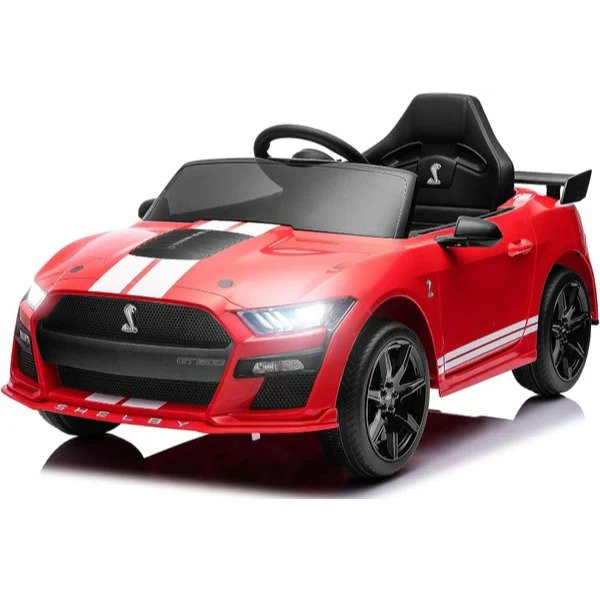
Buying a ride-on vehicle for your child can be an exciting experience. Children love the idea of having a little car of their own, while parents often see these vehicles as a fun way to encourage outdoor play and imaginative activities.
However, choosing the right kids car is not as simple as picking the most attractive design. Once you start comparing different models, you’ll come across specifications such as 12V and 24V batteries, single and two-seater designs, parental remote controls, weight limits, different motors, tire types, and various safety features.
If you’re beginning your search, you can explore Toyzinn’s kids car collection to see the different ride-on styles and specifications available.
The right choice depends on several factors, including your child’s age, height, weight, experience, where the vehicle will be used, and how long you expect your child to enjoy it.
This guide covers everything parents should consider before purchasing a ride-on car in the UAE, helping you make a decision based on practicality, safety, value, and your child’s individual needs.
What Is a Ride-On Car?
A ride-on car is a battery-powered children’s vehicle designed to allow a child to sit inside and operate a simplified driving system.
Depending on the model, children may be able to:
- Steer the vehicle
- Accelerate
- Brake
- Move forward and backward
- Use headlights
- Play music
- Operate a horn
- Connect music through Bluetooth on selected models
Many modern ride-on cars are designed to resemble real vehicles. Children can choose from sports cars, SUVs, police vehicles, pickup trucks, luxury-inspired cars, and other designs.
The combination of driving and imaginative play is one of the main reasons these vehicles remain popular with families.
However, not every ride-on vehicle is designed for every child.
The most important part of the buying process is matching the vehicle to the rider.
1. Start With Your Child’s Age
Age is usually the first factor parents consider, but it shouldn’t be the only one.
Two children of the same age can have very different heights, weights, coordination levels, and riding experience.
For that reason, age recommendations should be considered alongside the manufacturer’s weight and size specifications.
Younger Children
For toddlers and younger children, look for a compact vehicle with:
- Low and manageable speeds
- Simple controls
- Stable four-wheel construction
- Comfortable seating
- Appropriate weight capacity
- Parental remote control
A parental remote is particularly useful when a child is still learning how the vehicle works.
An adult can control the vehicle externally while the child becomes familiar with sitting in the car, steering, and the general riding experience.
Children Around 3 to 6 Years
Children in this age range may be ready to operate the vehicle themselves, depending on their development and the model.
Many 12V ride-on cars are designed with younger riders in mind and provide controlled performance for everyday recreational use.
However, parents should always check the specific model’s recommended age and weight range rather than assuming that every 12V vehicle is suitable for every child.
Older Children
Older or larger children may be better suited to bigger ride-on vehicles with higher battery capacity and stronger motors.
A 24V system can provide greater power and may perform better outdoors or on mild inclines.
But more power doesn’t automatically mean a better vehicle.
The goal is to choose a car that is powerful enough for the rider without being unnecessarily difficult to control.
2. Understand 12V vs 24V
Battery voltage is one of the most important specifications you’ll encounter when shopping for an electric ride-on vehicle.
In simple terms, voltage affects the amount of electrical power available to the motors.
12V Ride-On Cars
A 12V model can be a practical choice for younger children and everyday recreational use.
They may work well for:
- Gardens
- Driveways
- Courtyards
- Smooth outdoor paths
- Indoor areas where appropriate
The lower power output can provide a more manageable experience for younger riders.
For parents buying their child’s first ride-on vehicle, a 12V model can be a sensible starting point when it matches the manufacturer’s age and weight recommendations.
24V Ride-On Cars
24V models generally offer greater power.
They can be suitable for:
- Older children
- Larger riders
- Outdoor riding
- Larger gardens
- Slight inclines
Some models also use multiple motors, providing additional performance.
However, parents shouldn’t choose 24V simply because it sounds more powerful.
Consider the child’s age, experience, weight, and intended riding environment first.
We’ll explore the differences between these battery systems in greater detail in a later article in this content cluster.
3. Check the Weight Capacity
Weight capacity is one specification that should never be overlooked.
A vehicle might be advertised for a certain age range, but children of the same age can vary significantly in size.
Exceeding the manufacturer’s recommended weight can affect:
- Acceleration
- Battery runtime
- Motor performance
- Braking
- Stability
- Product lifespan
If you’re buying a ride-on vehicle that you hope your child will use for several years, consider the weight capacity carefully.
A model with a slightly higher capacity may offer better long-term value if your child is growing quickly.
At the same time, avoid buying a vehicle that is significantly too large simply because you want your child to “grow into it.”
A vehicle should be appropriate for the child when they actually use it.
4. Single-Seater or Two-Seater?
The number of seats can make a significant difference depending on your family.
Single-Seater Cars
A single-seater may be the better choice if:
- You have one child
- Storage space is limited
- The child will ride alone
- You want a smaller vehicle
- You prefer easier maneuverability
Compact vehicles can be particularly convenient for gardens and smaller outdoor spaces.
Two-Seater Cars
Two-seater models can be attractive to families with siblings.
They may allow children to share the experience, provided that the vehicle is specifically designed for multiple riders and the combined weight remains within the manufacturer’s recommended limit.
Before allowing two children to ride together, always check the individual model’s specifications.
A two-seater can also be useful when parents want a vehicle that will remain relevant as their child grows.
5. Look for a Parental Remote Control
A parental remote control is one of the most useful features available on many children’s electric cars.
For younger children, learning to control a vehicle can take time.
A remote allows an adult to maintain control while the child becomes comfortable with the experience.
Depending on the model, a parental remote may allow adults to:
- Steer
- Stop
- Change direction
- Control movement
This can provide an additional layer of supervision.
For parents buying a first ride-on vehicle, a remote control can be more practically valuable than cosmetic features such as additional lights or music.
6. Consider Where the Vehicle Will Be Used
Before choosing a model, think about the environment in which your child will actually ride.
A vehicle that performs well on a smooth driveway may behave differently on grass, gravel, or uneven garden surfaces.
Gardens
If your child will mostly ride on grass or garden paths, consider:
- Tire design
- Ground clearance
- Motor power
- Battery capacity
Driveways
Smooth driveways generally provide an easier surface for smaller ride-on cars.
However, make sure the riding area is away from moving vehicles and other hazards.
Indoor Areas
If you plan to use a ride-on car indoors, consider:
- Vehicle dimensions
- Wheel material
- Turning radius
- Surface compatibility
Always check that the manufacturer permits indoor use.
7. Think About Battery Runtime
Battery runtime is another important consideration.
Parents often see a stated runtime and assume their child will get exactly that amount of riding time.
In reality, battery performance depends on several factors.
These include:
- Rider weight
- Riding speed
- Terrain
- Battery capacity
- Number of motors
- Frequency of stopping and starting
- Surface conditions
A child riding continuously at maximum speed may use the battery faster than a child who rides slowly and takes frequent breaks.
Therefore, don’t evaluate battery life using a single number.
Think about how your child is likely to ride.
8. Pay Attention to Charging
Buying a battery-powered car means you’ll need to develop good charging habits.
Before purchasing, check:
- Charging time
- Battery type
- Charger specifications
- Recommended charging procedure
- Replacement battery availability
Always use the charger specified by the manufacturer.
Avoid experimenting with alternative chargers simply because the connector appears compatible.
Correct charging practices can help maintain battery performance and reduce unnecessary problems.
9. Protect the Vehicle From UAE Heat
The UAE climate introduces an additional consideration that parents shouldn’t overlook.
Extreme heat and direct sunlight can affect batteries, plastics, tires, and other components over time.
When the car isn’t being used, store it in:
- A shaded area
- A covered garage
- A dry storage space
- An area away from direct sunlight
Avoid leaving the vehicle exposed outdoors for long periods, particularly during the hottest part of the year.
Battery care is especially important because excessive heat can negatively affect battery performance and lifespan.
10. Safety Should Come Before Design
Children naturally choose toys based on appearance.
They may fall in love with a bright sports car, police vehicle, SUV, or luxury-inspired model before they know anything about the specifications.
Parents need to look beyond the design.
Before purchasing, check:
- Recommended age
- Maximum rider weight
- Maximum speed
- Braking system
- Seatbelt where provided
- Parental remote
- Stable wheel configuration
- Tire design
- Speed-control options
The most attractive vehicle isn’t necessarily the safest or most suitable one.
Choose the vehicle first based on the child, then let the design become the deciding factor between suitable options.
11. Licensed Ride-On Cars vs Generic Designs
Some children specifically want a miniature version of a real car.
Licensed ride-on vehicles are designed to replicate the appearance of real automotive brands.
They can include designs inspired by well-known manufacturers and sports cars.
The appeal is obvious.
A child who loves cars may find a realistic replica far more exciting than a generic ride-on vehicle.
However, licensing and appearance shouldn’t determine the purchase on their own.
A licensed car that’s too large, too powerful, or unsuitable for your child’s weight isn’t a better choice simply because it looks more realistic.
Safety and suitability should always come first.
12. Consider Storage Before Buying
Ride-on cars are considerably larger than conventional toys.
Before ordering, consider where you’ll keep the vehicle.
Measure:
- Garage space
- Storage room
- Doorways
- Elevator dimensions
- Available outdoor space
This becomes particularly important with larger 24V and two-seater models.
A vehicle that looks reasonably compact in product photographs can occupy a significant amount of space at home.
Planning your storage location in advance can save you from an unpleasant surprise after delivery.
13. Think About Long-Term Use
Parents naturally want their purchases to provide good value.
One way to improve value is to consider how long your child is likely to use the vehicle.
If your child is already close to the upper age or weight recommendation, a small model may only provide a short period of use.
On the other hand, buying an oversized model isn’t necessarily a smart solution.
The vehicle should still be appropriate for the child now.
Look for a model with enough capacity to accommodate reasonable growth without compromising present-day control and comfort.
14. Which Features Are Actually Worth Paying For?
Ride-on cars can come with many different features.
Some provide genuine practical value, while others mainly enhance the entertainment experience.
Parental Remote
One of the most useful features for younger children.
Adjustable Speed
Useful for gradually introducing children to independent riding.
Seatbelt
An important additional safety feature where included.
Working Lights
Can make pretend driving more engaging and improve visibility in suitable conditions.
Forward and Reverse
Makes maneuvering easier.
Music and Bluetooth
These features can make the experience more entertaining, particularly during longer play sessions.
The key is to prioritise functional features before entertainment extras.
15. Don’t Choose Based Only on Price
Price is obviously important when buying any children’s product.
But the lowest price doesn’t always represent the best value.
When comparing vehicles, consider the entire package:
- Battery
- Motor
- Build quality
- Weight capacity
- Safety features
- Seating
- Remote control
- Warranty
- Replacement parts
- Expected lifespan
A slightly more expensive vehicle can sometimes provide better value if it lasts longer and is more appropriate for your child.
At the same time, there’s no reason to spend significantly more on features your child won’t use.
The objective should be to find the right balance.
16. Think About Your Child’s Interests
A ride-on car isn’t simply a transportation toy.
It’s also an imaginative-play product.
A child who loves emergency services might prefer a police-style vehicle.
A child fascinated by sports cars may want a racing-inspired design.
Another child might prefer an SUV because it resembles the family vehicle.
Choosing a design that reflects your child’s interests can encourage them to spend more time playing outdoors.
This is one of the advantages of having a wide variety of ride-on designs available.
17. How to Introduce Your Child to Their New Car
The first ride should be about learning rather than speed.
Start by showing your child:
- How to sit properly
- How the steering works
- How to accelerate
- How to stop
- How to reverse
- What the controls do
Then choose a flat, open area.
Avoid:
- Roads
- Stairs
- Swimming pools
- Crowded areas
- Steep slopes
- Obstacles
If the model includes a parental remote, use it during the early learning period.
As your child becomes more comfortable, they can gradually develop greater control under adult supervision.
18. Common Mistakes Parents Should Avoid
Buying Only Based on Appearance
A great-looking car isn’t necessarily the right car.
Ignoring Weight Capacity
This can affect performance and longevity.
Choosing Too Much Power
More power isn’t automatically better for a young child.
Forgetting About Storage
Always consider where the vehicle will be kept.
Ignoring Battery Care
Poor charging and storage habits can shorten battery life.
Assuming Every 12V or 24V Model Is the Same
Battery voltage is only one part of the specification.
Motor configuration, weight capacity, design, terrain, and features can all differ.
A Simple Kids Car Buying Checklist
Before you purchase, ask yourself:
1. How old is my child?
2. What is their weight?
3. Have they used a ride-on vehicle before?
4. Where will they ride?
5. Do I need one seat or two?
6. Is 12V or 24V more appropriate?
7. Do I need a parental remote?
8. How much storage space do I have?
9. How frequently will the vehicle be used?
10. Does it have the safety features I need?
Answering these questions can make the buying process considerably easier.
Final Thoughts
Choosing the right ride-on vehicle for your child doesn’t need to be overwhelming.
Instead of choosing the first attractive model you see, start by understanding your child’s age, size, experience, and riding environment. From there, compare battery voltage, motor power, weight capacity, seating, safety features, parental controls, and storage requirements.
A suitable kids car should be enjoyable without being unnecessarily powerful. It should be comfortable enough for your child to use and durable enough to provide good value over its expected lifespan.
Parents in the UAE should also pay particular attention to battery care and storage because prolonged exposure to extreme heat and direct sunlight can affect ride-on vehicles over time.
Most importantly, remember that the best ride-on vehicle isn’t necessarily the biggest, fastest, or most expensive model. It’s the one that fits your child’s needs today while providing room for reasonable growth and continued enjoyment.
If you’re comparing different models, you can explore the kids ride on cars collection and compare specifications, seating options, battery systems, designs, and features before making your decision.
Once you’ve selected the right vehicle, introduce your child to it gradually, supervise their riding, and encourage safe habits from the beginning. With the right model and responsible use, a ride-on car can become much more than a toy—it can be a fun part of your child’s outdoor play and imaginative adventures.
For families looking beyond ride-on vehicles, Toyzinn offers a wider range of products for children’s play, entertainment, and everyday fun.
Frequently Asked Questions
What age is suitable for a kids car?
The appropriate age depends on the individual model. Always check the manufacturer’s age recommendation alongside the child’s weight, height, and experience.
Is a 12V or 24V car better?
Neither is automatically better. A 12V model may be more appropriate for younger riders, while a 24V vehicle can provide greater power for older or larger children.
Should I choose a two-seater?
A two-seater can be useful for siblings, provided the vehicle is specifically designed for multiple riders and its weight capacity allows it.
Is a parental remote control necessary?
It isn’t necessary for every child, but it can be extremely useful for younger or inexperienced riders because it gives parents additional control.
How long does a ride-on car battery last?
Battery runtime varies according to the model, battery capacity, rider weight, terrain, speed, and riding conditions.
Can ride-on cars be used in the UAE summer?
They can be used outdoors with appropriate precautions, but the vehicle should be protected from excessive heat and direct sunlight when stored.
Are licensed ride-on cars better?
Licensed models can provide a more realistic design, but licensing doesn’t automatically make a vehicle more suitable. Age, weight, safety, and performance should remain the priorities.
How do I choose the right size?
Consider your child’s age, height, weight, and experience, then compare those factors with the manufacturer’s specifications.