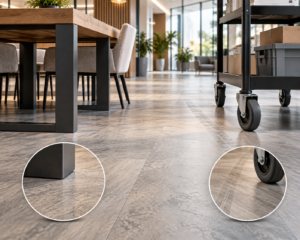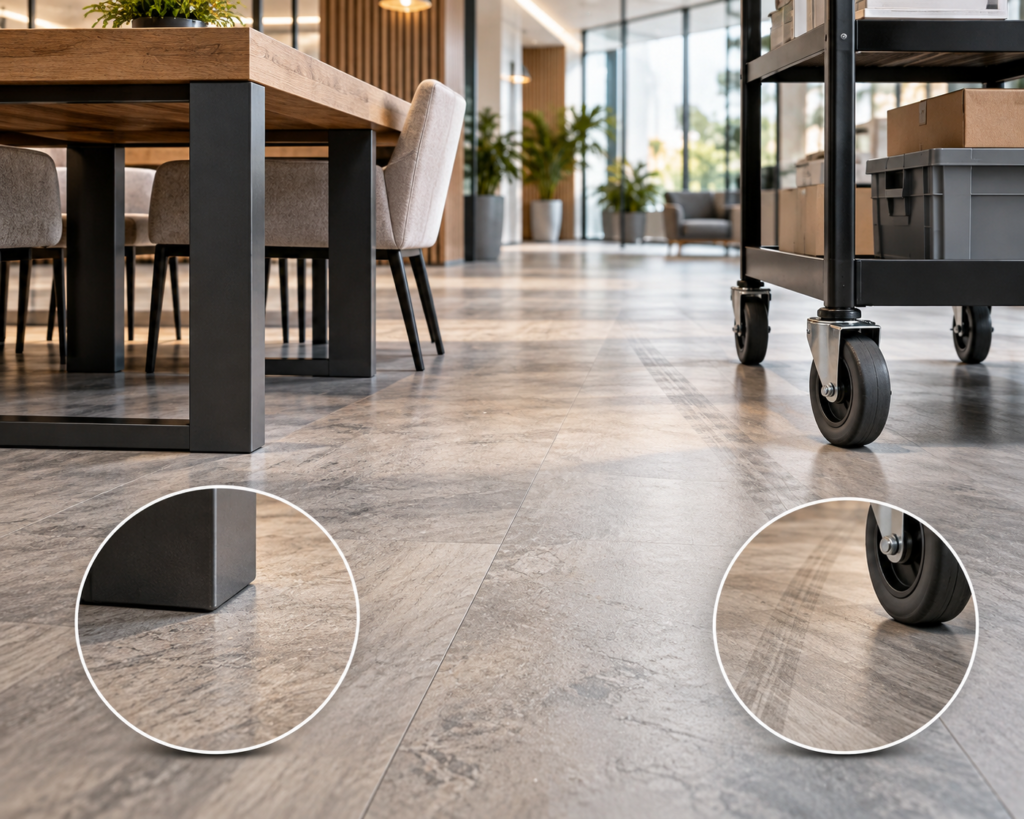
Commercial flooring faces constant pressure from furniture, equipment, foot traffic, and moving displays. While appearance is important, flooring must also withstand heavy loads without developing permanent dents or surface damage.
Solid Core Flooring is commonly considered for commercial spaces where durability, stability, and easy maintenance matter. However, not every flooring product responds to pressure in the same way.
Understanding indentation resistance under static and rolling loads helps businesses choose suitable flooring for retail stores, offices, trade shows, and hospitality environments.
This guide explains how indentation testing works, what influences flooring performance, and how businesses can evaluate solid core flooring before installation.
What Is Solid Core Flooring?
Solid core flooring generally refers to flooring products built with a dense, supportive structure designed to provide stability under regular use. However, construction and material composition vary between manufacturers.
Commercial solid core flooring may feature textured surfaces, flexible materials, or rigid constructions depending on the intended application.
At TSF Direct, commercial flooring options include Solid Core Diamond, Solid Core Levant, and Solid Core Coin designs, offering different surface appearances for professional environments.
The right selection depends on anticipated traffic, equipment weight, installation conditions, and maintenance needs.
Understanding Flooring Indentation Resistance
Indentation occurs when concentrated pressure causes a flooring surface to compress or deform.
Two common categories of pressure affect commercial flooring:
Static loads: Pressure applied by stationary objects such as desks, display fixtures, cabinets, or heavy furniture.
Rolling loads: Pressure created when wheeled equipment, carts, or movable furniture travels across a flooring surface.
Both can cause visible changes, although their effects differ.
For example, a heavy commercial table may leave an indentation after remaining in one position for several days. Meanwhile, equipment carts may create surface wear or damage along frequently traveled paths.
Testing these conditions helps determine whether a flooring material is suitable for its intended environment.
Static Load Indentation Benchmark
Static load testing evaluates how flooring responds to concentrated weight over a specified period.
The ASTM F1914 standard provides testing methods for measuring short-term and residual indentation in resilient flooring materials.
During testing, controlled pressure is applied to a flooring sample. The resulting indentation and recovery are measured.
Important evaluation factors include:
-
Load concentration and contact area
-
Duration of applied pressure
-
Initial indentation depth
-
Surface recovery after weight removal
-
Remaining permanent deformation
A flooring product with strong indentation resistance should minimize lasting surface changes under its rated conditions.
However, a dense core alone does not guarantee performance. Surface composition, overall thickness, and the supporting subfloor also influence the result.
Rolling Load Indentation Benchmark
Rolling loads introduce additional challenges because pressure continuously shifts across the flooring surface.
Commercial environments frequently use equipment with wheels, including portable displays, service carts, storage units, and movable furniture.
ASTM F2753 provides a framework for evaluating the effects of dynamic rolling loads on resilient flooring systems. It considers damage involving flooring surfaces, joints, and installation assemblies.
Rolling load performance depends on several conditions:
-
Total equipment weight
-
Wheel diameter and material
-
Number of wheel passes
-
Wheel contact area
-
Flooring installation quality
Smaller or harder wheels can concentrate pressure over a limited surface area, increasing the risk of damage.
For businesses that regularly reposition equipment, rolling load resistance deserves particular attention.
Static vs. Rolling Load Performance Comparison
The following table explains the differences between these two loading conditions. It is a qualitative comparison, not laboratory test data.
| Testing Factor | Static Load | Rolling Load |
|---|---|---|
| Pressure type | Stationary | Moving |
| Common source | Furniture and fixtures | Carts and wheeled equipment |
| Main concern | Permanent indentation | Surface, joint, or bond damage |
| Test focus | Depth and recovery | Repeated movement effects |
| Typical application | Offices and retail displays | Warehouses and exhibit spaces |
Neither load category should be ignored when selecting solid core flooring for commercial applications.
Factors That Affect Solid Core Flooring Performance
1. Flooring Thickness and Construction
The overall construction influences how flooring distributes pressure.
A thicker product may provide additional support, but thickness alone does not establish indentation resistance.
2. Subfloor Preparation
An uneven subfloor can create unsupported areas beneath the flooring.
Proper preparation helps distribute pressure more consistently and reduces the possibility of installation-related damage.
3. Furniture and Equipment Design
Furniture feet and equipment wheels influence pressure concentration.
Using appropriate protective pads beneath commercial tables and heavy fixtures can help reduce localized indentation.
4. Daily Traffic Patterns
High-traffic corridors experience different stresses from areas containing stationary furniture.
Businesses should evaluate both movement patterns and long-term equipment placement when comparing flooring options.
Combining Flooring With Other Commercial Solutions
Commercial flooring works best when selected as part of a complete interior environment.
For example, custom matting can protect entrances from tracked-in dirt and moisture while complementing surrounding flooring.
Businesses can also incorporate printed floor graphics to display promotional messaging, direct visitors, or reinforce branding throughout a retail or exhibition space.
These additions should be selected with flooring compatibility, surface protection, and traffic conditions in mind.
TSF Direct provides commercial flooring, custom matting, display solutions, and furnishing options for retail, hospitality, trade shows, and other professional environments.
How to Choose Solid Core Flooring for Heavy Loads
Before purchasing flooring, businesses should review manufacturer specifications rather than relying entirely on product descriptions.
Request information about indentation testing, recommended load limits, installation requirements, and compatibility with wheeled equipment.
For spaces containing heavy furniture, consider the possibility of permanent indentation. For environments using equipment carts, examine rolling load performance and joint stability.
It is also important to distinguish laboratory results from real-world performance. Conditions such as installation quality, temperature, maintenance, and equipment use may influence outcomes.
Conclusion
Choosing commercial flooring involves more than selecting an attractive color or surface texture.
Understanding static and rolling load indentation helps businesses identify potential wear issues before installation.
Solid core flooring can be a practical option for commercial environments, but product-specific testing and proper installation remain essential.
For businesses planning retail, hospitality, or exhibition projects, TSF Direct offers commercial flooring and complementary solutions to help create functional, professional spaces.
Frequently Asked Questions
1. Does solid core flooring resist heavy furniture indentation?
Resistance depends on the flooring’s construction, weight distribution, and duration of pressure. Manufacturer test results provide the most reliable guidance.
2. What is the difference between static and rolling loads?
Static loads remain in one location, while rolling loads move across the flooring surface and may create repeated stress.
3. Can rolling carts damage solid core flooring?
Yes. Heavy carts, hard wheels, and repeated movement can cause surface or installation damage, particularly when the flooring is not rated for those conditions.
4. How can businesses prevent flooring indentation?
Use furniture pads, suitable equipment wheels, proper subfloor preparation, and flooring products rated for the expected loads.
5. Where can businesses find commercial solid core flooring?
TSF Direct offers solid core surface options and other commercial flooring solutions for professional, retail, hospitality, and exhibition applications.