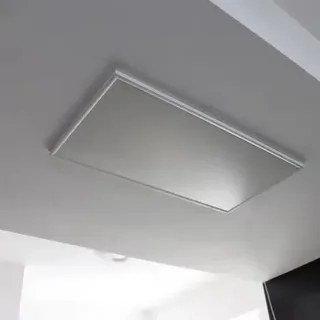
Glass extensions and rooms with extensive glazing can lose warmth near windows and doors, making consistent indoor comfort more difficult to achieve. Radiant heating provides a way to direct warmth towards occupants and nearby surfaces rather than depending entirely on heated air circulating through the space. Infrared ceiling panels can be mounted overhead to deliver radiant heat while keeping walls and floor areas free for furniture and movement. This arrangement can be useful in homes and commercial interiors where available space needs to remain practical and uncluttered. Their discreet installation also suits layouts that prioritise visual simplicity, allowing heating equipment to be integrated without occupying valuable wall or floor space.
Why Infrared Ceiling Panels Suit Space-Conscious Interiors
Ceiling-mounted heating is an option for interiors where maintaining usable floor areas and clear wall space is a priority. Positioned overhead, panels can provide warmth without limiting furniture placement or interrupting movement through the room. This arrangement is particularly useful in spaces designed around practical layouts and open surroundings.
Their discreet installation can suit contemporary residences, offices, and commercial settings with different furnishing requirements. Considerations around household energy use have also brought attention to heating systems that can target specific occupied areas. Radiant panels provide one possible solution, although results depend on insulation, room size, panel capacity, and coverage.
Modern interiors often rely on flexible furniture arrangements and minimal visual clutter. Keeping heating equipment above the occupied space leaves more room for storage, furnishings, and everyday activities. These characteristics make ceiling-mounted heating worth considering when interior flexibility and thermal comfort need to be balanced.
How Infrared Ceiling Panels Deliver Radiant Warmth
Infrared ceiling panels emit radiant energy towards people, furnishings, and surfaces within the intended heating area. Unlike systems that rely mainly on convection to warm circulating air, they transfer energy directly to objects and occupants. The resulting warmth depends on factors such as panel placement, ceiling height, room dimensions, and surrounding materials.
When exposed surfaces absorb this energy, they warm up and contribute to the occupants’ perception of comfort. Because infrared panels do not require fans to produce radiant heat, they can avoid some of the forced air movement associated with fan-assisted heaters. However, comfort levels still depend on suitable output, installation position, insulation, and the room’s overall arrangement.
Managing Electricity Use with Infrared Ceiling Panels
Infrared ceiling panels convert electricity into radiant heat, directing energy towards occupied areas rather than relying solely on warming all the air in a room. This may suit spaces where heating demand is concentrated in particular zones, although actual energy use depends on the building, operating schedule, and desired temperature. Correct placement helps deliver warmth across the area the panel is intended to serve.
Running costs are influenced by electrical capacity, hours of operation, insulation, and indoor temperature settings. Where appropriate, heating selected occupied areas may reduce the need to maintain the same temperature throughout unused rooms. Comparing panel output with the property’s heating requirements can help estimate likely electricity consumption and ongoing expenses.
Ceiling installation also preserves floor and wall space, which may reduce the need for additional heating equipment in some layouts. Since radiant heating behaves differently from air-based systems, its suitability should be assessed against room dimensions and comfort expectations. Appropriate sizing, positioning, and scheduling can help manage electricity use while providing the required warmth.
Residential and Commercial Applications for Infrared Ceiling Panels
Infrared ceiling panels can be considered for a variety of indoor settings, including houses, offices, retail spaces, and selected industrial environments. In residential properties, they may suit bedrooms, living rooms, bathrooms, and other areas where the ceiling structure and product specifications allow suitable installation. Their output should be matched to the room’s heating needs and the intended coverage area.
Commercial environments such as meeting rooms, shops, offices, and hospitality venues may use overhead heating where keeping walls and walkways clear is important. This arrangement allows existing furniture layouts to remain largely unchanged while offering another way to maintain comfortable indoor temperatures.
Warehouses and industrial buildings may use radiant panels to heat particular work areas when heating an entire large space is impractical. Their suitability depends on workplace requirements, ceiling height, environmental conditions, electrical safety, and the amount of warmth needed in each zone. Careful planning helps determine whether the equipment can meet the demands of a specific application.
Coordinating Infrared Ceiling Panels with Interior Design
The location and appearance of ceiling heating equipment can influence how well it fits within an interior design plan. Since panels are installed overhead, they may be less visually prominent than portable heaters or conventional radiators. Ceiling heating panels can be considered for spaces where heating needs to complement existing architectural features and furnishings. Installation options depend on the product design, ceiling construction, and compatibility with suspended ceiling arrangements.
Overhead positioning keeps lower wall sections and floor areas available for storage, furniture, and movement. This can be particularly useful in smaller properties or multipurpose rooms where space has to accommodate several activities. Unlike many floor-standing heaters and wall-mounted radiators, ceiling panels generally do not create additional obstacles at ground level.
Their low-profile placement may also suit open-plan interiors where a consistent visual appearance is desirable. Coordinating panel locations with lighting, ceiling features, and room layouts can help maintain the intended design while providing heating. Appropriate planning and professional installation allow the equipment to meet functional requirements without unnecessarily restricting the use of the surrounding space.
Maintaining Comfortable Indoor Conditions with Infrared Ceiling Panels
Infrared ceiling panels provide radiant warmth without depending primarily on continuous air circulation. By transferring energy directly to occupants and surfaces, they may reduce the forced air movement associated with some convection-based heating systems. This can limit the disturbance of settled dust compared with fan-driven heating, although indoor air quality also depends on ventilation, cleaning, and other environmental factors.
Radiant heat can contribute to a comfortable indoor environment when the panels are correctly sized and positioned. Suitable coverage may help reduce localised cold spots and provide warmth where occupants spend their time. The overall result depends on insulation, room layout, panel output, and how the heating system is operated.
Simplified Installation for Infrared Ceiling-Panels
Infrared ceiling-panels can be installed across different ceiling structures and room layouts, offering flexibility for varying architectural requirements. Depending on the property, panels may be mounted onto plasterboard ceilings, suspended ceilings, or integrated into customised ceiling arrangements. Installation generally requires securely mounting the panel and connecting it to the suitable electrical supply, allowing the system to be introduced without major structural modifications. This makes the technology appropriate for both new buildings and existing properties.
Ceiling installation is especially beneficial where wall and floor areas are restricted, as overhead positioning avoids interfering with furniture and other interior elements. It can also minimise the need for additional equipment such as radiators or extensive ducting. Suitable panel placement can help distribute warmth effectively across the intended area, while multiple units can be positioned across larger rooms or separate heating zones based on specific requirements.
Keeping Infrared Ceiling Panels in Good Condition through Regular Care
Infrared ceiling panels are generally designed to provide consistent heating over extended periods, with maintenance mainly involving surface cleaning and occasional condition checks. Clearing away dust and dirt helps preserve the panels’ appearance and allows their heating surfaces to remain free from accumulated debris. If recommended by the manufacturer, a soft cloth with an appropriate mild cleaning product can be used for cleaning. Harsh detergents, abrasive materials, and rough cleaning equipment should be avoided because they may damage the panel’s exterior finish.
Routine checks can identify problems such as insecure mounting points, visible wear, or deterioration that may need professional assessment. Electrical issues, component replacements, and installation adjustments should be addressed by qualified technicians with the appropriate skills and equipment. While these heating units typically contain relatively few moving components, their electrical connections, mounting hardware, and control systems still need suitable attention. Observing the manufacturer’s maintenance recommendations can help preserve reliable operation and maintain consistent heating output.
Essential Safety Measures and Installation Standards for Infrared Ceiling Panels
Infrared ceiling panels can include safety functions designed to support reliable operation when the equipment is used in accordance with its instructions. Depending on the model, features such as temperature regulation and overheat protection may stop the unit from operating when certain temperature limits are reached. These mechanisms provide an additional safeguard, although their availability and design differ between products.
Ceiling installation can keep heating equipment away from accidental knocks and everyday contact, but the panels must still be securely fixed to an appropriate mounting surface. Installation should follow the manufacturer’s instructions and applicable electrical requirements, with careful attention to positioning in homes where children or pets may be present. Correct mounting helps reduce the risk of the equipment shifting or becoming detached during operation.
Product specifications should be checked to establish which protective features are actually included rather than assuming that all panels offer the same safeguards. Some designs enclose internal heating components, while suitable construction materials may help withstand the temperatures associated with normal operation. Professional installation, adequate clearance from surrounding materials, and compliance with operating guidance all contribute to safer use in residential and commercial settings.
Conclusion
Infrared ceiling panels offer an overhead heating option for spaces where preserving usable floor area and maintaining a simple interior layout are priorities. Their radiant output warms occupants and surrounding surfaces without relying exclusively on circulating heated air. This arrangement can suit homes, workplaces, and commercial interiors with limited wall space or specific design requirements. Panel capacity, ceiling placement, and room characteristics should be considered to achieve suitable warmth and manage electricity use. With straightforward cleaning and occasional condition checks, these panels provide a space-efficient heating arrangement with minimal disruption to interior furnishings.
FAQs
How does ceiling heating-panels technology compare with conventional heaters?
Ceiling heating-panels transfer warmth through radiant energy, directing it towards people and surfaces rather than relying primarily on warm air circulating throughout the room. Their performance depends on panel placement, output, room dimensions, and how effectively the heated area matches the occupants’ needs.
Which locations are appropriate for infrared ceiling panels?
Infrared ceiling panels may be installed in residential rooms, offices, retail spaces, and selected commercial or industrial environments. Their suitability depends on ceiling construction, room dimensions, electrical requirements, and the heating capacity needed for the intended space.
How can ceiling heating-panels be kept in good condition?
Routine care usually involves keeping the panel surface free from dust and checking for visible signs of wear. Installation and electrical components should be assessed by a qualified professional if damage, unusual operation, or other concerns arise.
Are ceiling heating-panels suitable for use in family homes?
Ceiling heating-panels can suit family homes because their elevated position keeps the units away from normal floor-level activities. This arrangement preserves space for furniture and movement, although correct installation, suitable clearances, and compliance with the manufacturer’s safety instructions remain important.
| Related Business Listings |
| Contact Directory |
| Local Business Profiles |