In Armenia, a meal is never just about fuel; it’s an invitation into a culture that has survived, adapted, and thrived for thousands of years.
Understanding armenian cuisine requires looking past the surface level of kebabs and flatbreads. It is a deeply complex culinary tradition shaped by geography, ancient trading routes, and an unyielding commitment to fresh, locally sourced ingredients.
Let’s take a journey through the rich heritage, unique ingredients, and iconic Armenian dishes that define this ancient culinary landscape.
A Flavor Profile Shaped by Time: Armenian Cuisine History
To truly appreciate the food, we have to talk about armenian cuisine history. Armenia is one of the oldest continuously inhabited regions in the world, nestled in the mountainous Highlands of the South Caucasus. Because of its strategic location, it historically sat right at the crossroads of Europe, Asia, and the Middle East. Over the centuries, Silk Road merchants, Roman legions, Persian kings, and Ottoman rulers all crossed through this territory.
Naturally, this meant a massive exchange of agricultural techniques and ingredients. However, while you might spot similarities to Mediterranean, Middle Eastern, or Slavic cooking, Armenian food has maintained a fiercely distinct identity.
Instead of relying on heavy, overpowering spice blends like cumin or coriander to drive the flavor profile, Armenian chefs traditionally let the natural quality of the raw ingredients do the heavy lifting. The secret weapons here are slow cooking, fermentation, and a massive variety of wild mountain herbs.
The Elements of the Armenian Pantry
If you open an Armenian kitchen cabinet, you won’t necessarily find a sprawling spice rack. Instead, the magic lies in a few foundational elements that form the backbone of almost every meal:
- Fresh and Dried Herbs: Tarragon, dill, parsley, cilantro, and mint are used by the handful, not just as a garnish. Wild mountain greens like aveluk (wild sorrel) are harvested, dried, and braided into long chains to be used in winter soups.
- Grains and Pulses: Bulgur (cracked wheat) and lentils are staples. Bulgur is often cooked with chicken broth and butter to create rich pilafs.
- Fruits and Nuts: Pomegranates, walnuts, and apricots find their way into savory dishes, stews, and sauces, providing a delicate balance of sweet and sour.
- Dairy: Matsun (a traditional fermented yogurt similar to kefir but thicker) is eaten with everything. It’s used as a base for cold soups, mixed with garlic to top savory dishes, or drained to make a thick spread.
The Stars of the Table: Iconic Armenian Dishes
No exploration of armenian cuisine is complete without diving into the specific dishes that have brought families together for generations. If you’re looking to experience the true essence of this culture, these are the absolute essentials.
- Lavash (The Lifeline of Armenia)
You cannot talk about Armenian food without talking about Lavash. This ancient, paper-thin flatbread is so vital to the culture that it is inscribed on UNESCO’s Representative List of the Intangible Cultural Heritage of Humanity.
Traditionally made by a group of women, the dough is rolled thin, stretched over a cushion, and slapped against the hot clay walls of an underground oven called a tonir. It can be eaten fresh and soft, or dried out and stored for months, then rehydrated with a sprinkle of water when it’s time to serve.
- Khorovats (The Ultimate Barbecue)
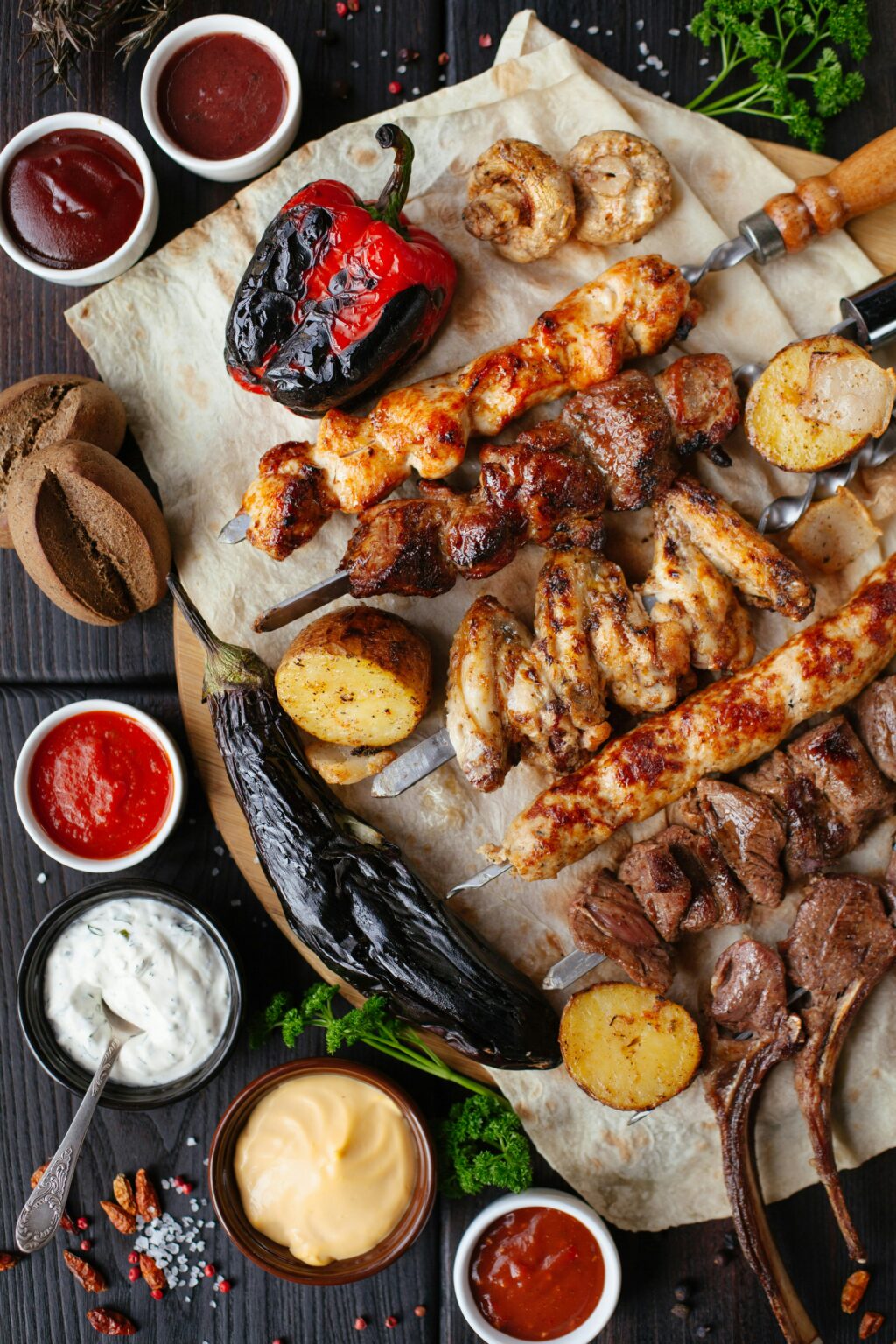
While many cultures claim a barbecue tradition, Khorovats is elevated to an art form in Armenia. It’s not just food; it’s a social ritual usually spearheaded by the men of the family. Large chunks of meat (typically pork, lamb, or beef) are marinated simply—often just with onions, salt, and pepper and skewered on thick metal rods called shampoors. They are grilled over open wood coals alongside whole tomatoes, eggplants, and bell peppers, which are later peeled and mashed into a smoky side salad.
- Tolma (Stuffed Perfection)
Tolma (often called dolma in neighboring countries) is a testament to the patient, laborious nature of Armenian home cooking. It involves wrapping a seasoned mixture of minced meat, rice, onions, and herbs into tender, young grape leaves. In the winter, a variation using cabbage leaves, apples, and quinces is popular. Each roll is packed tightly into a pot and simmered until incredibly tender, usually served piping hot with a generous dollop of garlic-infused matsun.
- Khash (The Winter Ritual)
Khash is perhaps the most unique dish in armenian cuisine history. It is a rich, gelatinous broth made by boiling cow’s feet slowly overnight with absolutely no salt or spices. It is strictly a cold-weather dish, eaten early in the morning.
The eating process is highly specific: diners add salt, crushed garlic, and heaps of dried lavash into the bowl until it absorbs the liquid into a thick porridge. It’s traditionally enjoyed with close friends, plenty of toasts, and a shot of traditional fruit vodka (like mulberry or apricot).
Ultimately, armenian cuisine is an expression of resilience. The recipes made today in modern kitchens are remarkably unchanged from the ones cooked over stone hearths thousands of years ago. It’s a cuisine that honors the earth, respects the seasons, and transforms simple ingredients into an absolute feast.
The next time you get a chance to try authentic Armenian food, take your time. Rip off a piece of lavash, pass the platter, and enjoy a taste of history.