In contemporary high-end residential design, the ground plane serves as the visual canvas that binds an entire estate together. For decades, a perfectly manicured natural grass lawn was considered the gold standard of luxury curb appeal. However, maintaining a flawless, deep-green turf canopy in areas subjected to harsh weather, shaded microclimates, and heavy foot traffic has become an expensive, uphill battle.
Between chemical fertilizer runs, water restrictions, muddy pet tracks, and the unavoidable bare spots caused by pool overspray, natural grass often falls short of the pristine standard demanded by modern architecture.
To bridge this gap, elite landscape designers have abandoned high-maintenance natural sod. Instead, they specify premium, multi-tonal synthetic turf grids. However, achieving a resort-grade appearance relies entirely on advanced site prep and exact geometry. Investing in professional artificial turf installation guarantees that your green transitions stay flush, manicured, and perfectly integrated with your structural hardscapes across every season.
1. The Engineering Sub-Base: Ensuring Stability and Fast Drainage
The ultimate indicator of an amateur synthetic lawn installation is a surface that begins to wrinkle, sag, or trap standing water within a few seasons. These failures are almost never caused by the turf fabric itself; they are the direct result of poor subgrade prep. Professional installation treats the lawn footprint as a high-flow, sub-surface drainage matrix.
True architectural-grade execution begins with excavating the native soil down 3 to 5 inches to completely clear away weak organic root layers and loose topsoil. The native earth is then mechanically packed using industrial vibratory plates to achieve a stable foundation.
Next, a heavy-duty, non-woven geotextile stabilization fabric is laid down to prevent subgrade clay from migrating upward. On top of this membrane, crews build a multi-layered base of angular crushed stone and fine aggregate chips. This stone base is compacted to a rigid, uniform profile that supports heavy foot traffic while allowing heavy downpours to drain straight through to the water table at a rate of over 30 inches per hour.
2. Navigating the Complexities of Geometric Paver Ribboning
One of the most sought-after aesthetics in luxury landscape architecture is the integration of clean, large-format stone pavers separated by vibrant bands of manicured green turf. While this design creates a striking geometric contrast, executing it with natural grass is nearly impossible to maintain. Lawnmower blades scalp the edges, string trimmers chip away at the premium stone, and mud washes over the pavers during rainstorms.
| Landscape Element | Natural Sod Ribboning | Professional Synthetic Installation |
| Edge Alignment | Ragged, uneven growth borders that creep onto stone surfaces. | Hand-set, double-stapled seams that maintain sharp lines. |
| Elevation Transitions | Soil settling creates uneven trip hazards around stone borders. | Aggregate bases are leveled to match the exact millimeter height of adjacent coping. |
| Moisture Trapping | Mud and pooled water collect in the joints, staining light stone. | Rapid sub-surface drainage eliminates surface pooling and mud tracks completely. |
| Ongoing Maintenance | Constant mowing, hand-weeding, and edge-trimming required. | Zero mowing or chemical treatments; occasional rinsing and grooming. |
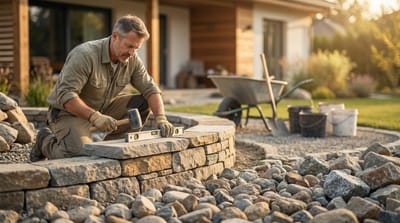
By utilizing commercial-grade synthetic turf for custom paver ribboning, installers anchor the turf edges to heavy-duty composite borders or concrete perimeter anchors. This ensures that the green bands remain flush with the adjacent travertine or porcelain tile surfaces, completely eliminating trip hazards and preserving clean architectural lines.
3. Protecting Modern Swimming Pool Perimeters and Wet Zones
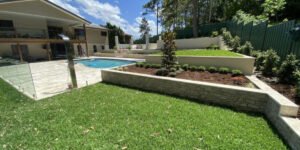
Luxury custom pool builds frequently position lawn spaces directly against the pool coping to soften the landscape and create a resort-style aesthetic. However, saltwater or chlorinated pool splash-back quickly scorches natural grass, leaving yellow patches of dead sod along the water’s edge. Furthermore, tracking loose grass clippings and wet mud back into the pool clogs expensive filtration loops and pumps.
Professional artificial turf completely resolves this chemical conflict. High-end turf fibers are manufactured from UV-stabilized, non-porous polymers that are entirely immune to chemical yellowing, staining, and fading. The advanced backing allows pool water to drain straight through, keeping the pool deck entirely mud-free, slip-resistant, and clean enough for bare feet.
4. Multi-Tonal Aesthetics and Smart Material Specification
The goal of contemporary artificial turf design is to replicate the rich depth of a living ecosystem. Cheap, builder-grade synthetic grass features a uniform, shiny green color that looks noticeably fake.
In contrast, professional architectural-grade turf blends multiple blade shapes and color profiles—including olive, emerald, and field green—woven alongside a textured tan thatch layer. This multi-tonal design eliminates glare, softens light reflection, and mirrors the exact texture of a perfectly manicured natural lawn.
Additionally, elite installers select specific blade styles and backing matrices tailored to how the space will be used. High-traffic pet lawns are specified with antimicrobial infills and high-flow backings that rinse entirely clean, while custom putting greens utilize tight, texturized nylon surfaces calibrated to deliver a true, tour-quality ball roll.
5. Conclusion: Protecting Your Asset with Long-Term Performance
Upgrading your landscape with professional artificial turf installation represents a permanent investment in your property’s real estate equity and curb appeal. By eliminating the ongoing costs of seasonal overseeding, automated irrigation lines, weed control treatments, and chemical fertilizers, a custom synthetic lawn pays for itself within a few short years. More importantly, it insulates your outdoor living spaces from muddy settling and water logging.
Your estate is a permanent reflection of your lifestyle. By bypassing high-volume, cut-corner installers and partnering with a design-build firm that understands advanced base stabilization and geometric perimeter anchoring, you protect your capital investment. The final result is a beautiful, low-maintenance private resort footprint that stays immaculate year-round.