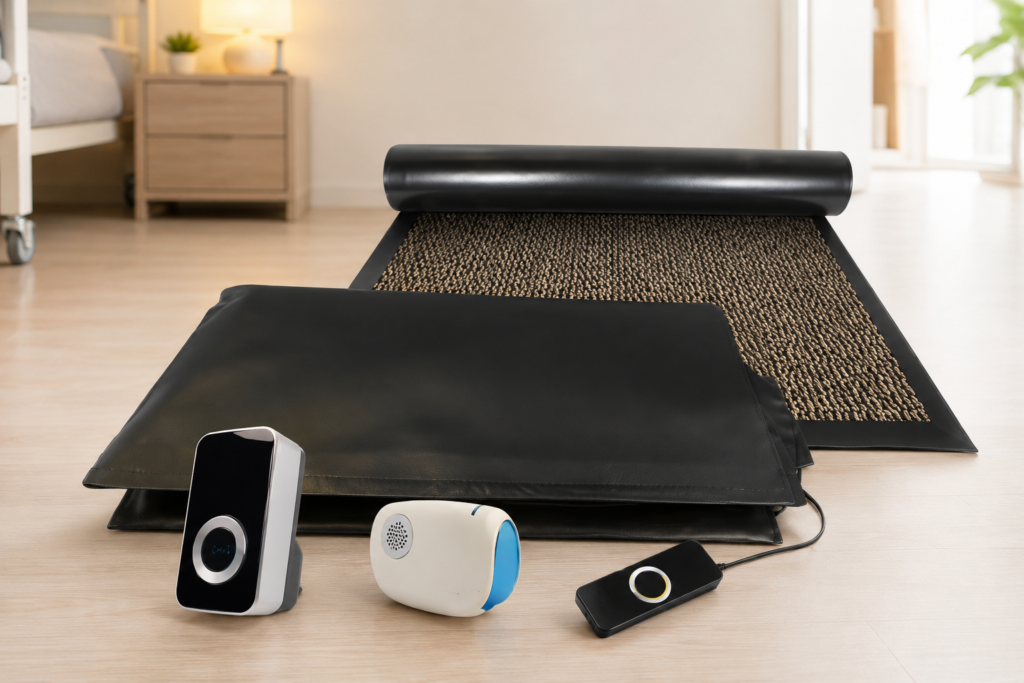
Caring for someone with dementia requires patience, attention, and a safe environment. Changes in memory, balance, and awareness can cause a person to get out of bed unexpectedly, walk without assistance, or wander into potentially unsafe areas. These situations can be particularly concerning at night when caregivers may not immediately notice movement. A Patient Wandering Alert System can provide an additional layer of awareness by alerting caregivers when a patient enters a monitored area.
Wireless pressure mat alarms are one practical option for supporting movement monitoring in dementia care. Here are five important ways they can help.
1. Helps Detect Unexpected Patient Movement
One of the main benefits of a Patient Wandering Alert System is that it can notify caregivers when a patient begins moving from a monitored location.
A wireless pressure mat can be placed beside a bed, chair, or doorway. When the patient steps onto the mat, pressure activates the system and sends an alert to a receiver. This can help caregivers become aware of movement without continuously watching the patient.
2. Supports Faster Caregiver Response
Timely awareness can be valuable when caring for people with dementia. A patient may get up suddenly and require assistance before walking further.
A dementia wandering alarm can provide an early notification, giving caregivers an opportunity to check on the patient and provide support when needed. This can be particularly useful during nighttime hours when movement may be harder to notice.
3. Helps Reduce Potential Fall Risks
Falls are an important concern for older adults, especially when mobility and balance are affected. A patient may attempt to stand from a bed or chair without realising that they need assistance.
A pressure mat for dementia care can be positioned beside a bed or another high-risk location. When movement activates the mat, caregivers can respond and assist the patient if necessary.
The system cannot guarantee that a fall will be prevented, but earlier awareness may help reduce opportunities for unsupervised movement that could result in an accident.
4. Supports Safer Wandering Management
Wandering can happen for many reasons, including confusion, restlessness, anxiety, or searching for a familiar person or place. Constantly monitoring a patient can be difficult for caregivers.
A Patient Wandering Alert System can help by monitoring selected areas. For example, a wireless pressure mat can be placed near a bedroom door or another frequently used exit. If the patient steps onto the mat, the caregiver receives an alert and can check the situation.
This monitoring-based approach allows patients to maintain movement while providing caregivers with greater awareness.
5. Provides Greater Peace of Mind for Caregivers
Looking after a person with dementia can be demanding, particularly when caregivers are concerned about unexpected movement during the night. A wireless pressure mat alarm can provide an additional layer of monitoring.
Depending on the system, features may include:
- Wireless communication between the mat and receiver
- Portable or plug-in receiver options
- Different mat sizes for different locations
- Audible caregiver alerts
- Easy placement beside beds or doorways
- Potential compatibility with existing nurse-call systems
These features can make a Patient Wandering Alert System useful in homes, residential care settings, and other dementia-care environments.
Choosing the Right System for Dementia Care
When selecting a patient wandering alarm, caregivers should consider the patient’s individual needs and the location where monitoring is required. Important factors include:
- Mat size and coverage
- Wireless operating range
- Receiver type
- Alert volume
- Durability
- Ease of installation and maintenance
- Compatibility with existing care systems
The system should also be used alongside other safety measures, including clear walking paths, suitable lighting, supervision, and appropriate mobility support.
Conclusion
A Patient Wandering Alert System can be a valuable addition to a dementia-care safety plan. By detecting movement and providing timely alerts, wireless pressure mat alarms can help caregivers respond more quickly, support safer wandering management, and potentially reduce some fall risks.
When combined with appropriate supervision and a safe environment, this technology can provide practical support for caregivers while helping people with dementia maintain a greater degree of freedom and dignity.